

baby play mat foam is one of the most searched options for parents creating a safe and comfortable play space for babies in 2024. With recent changes to safety regulations and growing awareness of toxic chemicals, choosing the right foam play mat is more complex than ever. This guide gives you clear, actionable information based on the latest research, so you can make smart, healthy choices for your baby.
Key Takeaways
- Only buy baby play mat foam products that comply with current US (ASTM F963, CPSIA), EU (REACH, Toy Safety Directive), or UK regulation and certifications like OEKO-TEX Standard 100, GOTS, or GOLS.
- Non-toxic foam play mats made from formamide-free EVA, GOLS-certified latex, or GOTS-certified cotton offer the best safety—but cleaning and resale value are often overlooked.
- Watch for real-world complaints like strong odors, durability problems, or hard-to-clean surfaces—often linked to non-certified or cheaply made foam play mats.
- What Is Baby Play Mat Foam and Why Is It So Popular?
- How to Choose the Safest and Most Durable Baby Play Mat Foam (Step-by-Step)
- Advanced Analysis & Common Pitfalls (What Most Parents Miss)
- Conclusion
- FAQ
What Is Baby Play Mat Foam and Why Is It So Popular?
Baby play mat foam refers to padded, often interlocking floor coverings made from materials like EVA foam, natural latex, or sometimes certified organic textiles. Their main job is to protect babies from bumps and falls, provide a soft surface for crawling and play, and offer some barrier against cold, hard flooring.
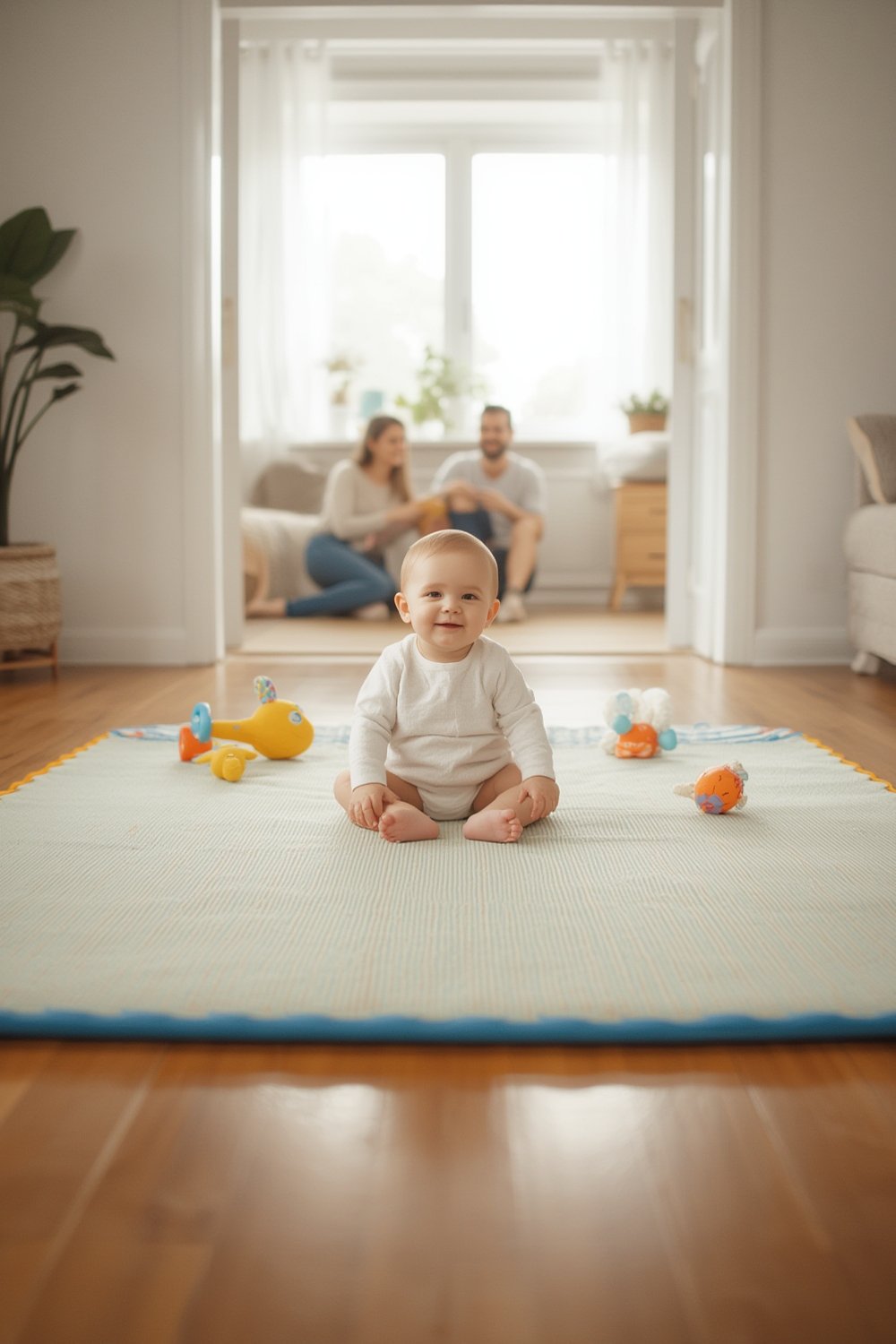
Foam play mats are popular because they are lightweight, come in various colorful designs, and are quick to assemble. Many puzzle-style mats can be customized for any room size. But safety is a growing concern. Some older or uncertified mats can emit toxic chemicals like formamide or phthalates, which are linked to long-term health risks. That’s why new regulations now require third-party testing and certification for products used in children’s spaces.
In recent years, brands have added safety labels and certifications like OEKO-TEX Standard 100, GOTS (for organic cotton), or GOLS (for organic latex)—providing more transparency. But safety labeling varies from country to country, so it’s important to know what these logos actually mean and to ask questions about the materials and production methods used in the mat you choose.
For parents also concerned about chemical free baby care and safe toy storage, the focus on healthy, certified materials is now more than a trend—it’s a must.
How to Choose the Safest and Most Durable Baby Play Mat Foam (Step-by-Step)
Ready to pick the best baby play mat foam? Follow these steps to avoid common mistakes and maximize both safety and value:
- Check Compliance for Your Country: In the US, your foam play mat should meet ASTM F963 and CPSIA rules (see CPSC guidance). For the EU and UK, look for REACH and EN-71 compliance. Stick to products with clear OEKO-TEX Standard 100, GOTS, or GOLS certification (not just “eco-friendly” claims).
- Choose the Right Material: Opt for formamide-free EVA foam (check for “Prop 65 compliant” labels in the US), GOLS-certified natural latex (if your child has no latex allergy), or GOTS-certified organic cotton (better for sensitive skin on top, but offers less cushioning than foam).
- Beware of PVC, Standard Polyurethane, and Non-certified EVA: These may be cheaper but often contain phthalates, PBDEs, or other chemicals linked to respiratory and developmental risks. Skipping certification to save a few dollars is a gamble with your child’s health (source: Green Child Magazine).
- Pay Attention to Design: Puzzle-piece mats should fit tightly, so dirt and liquids cannot seep between seams. Mats with removable washable covers (usually organic cotton) are easier to keep hygienic.
- See Past the Hype: “Non-toxic” has no legal meaning. Trust only third-party certification and real test results. Many popular sellers online do not list manufacturing country, test dates, or lab names—avoid these.
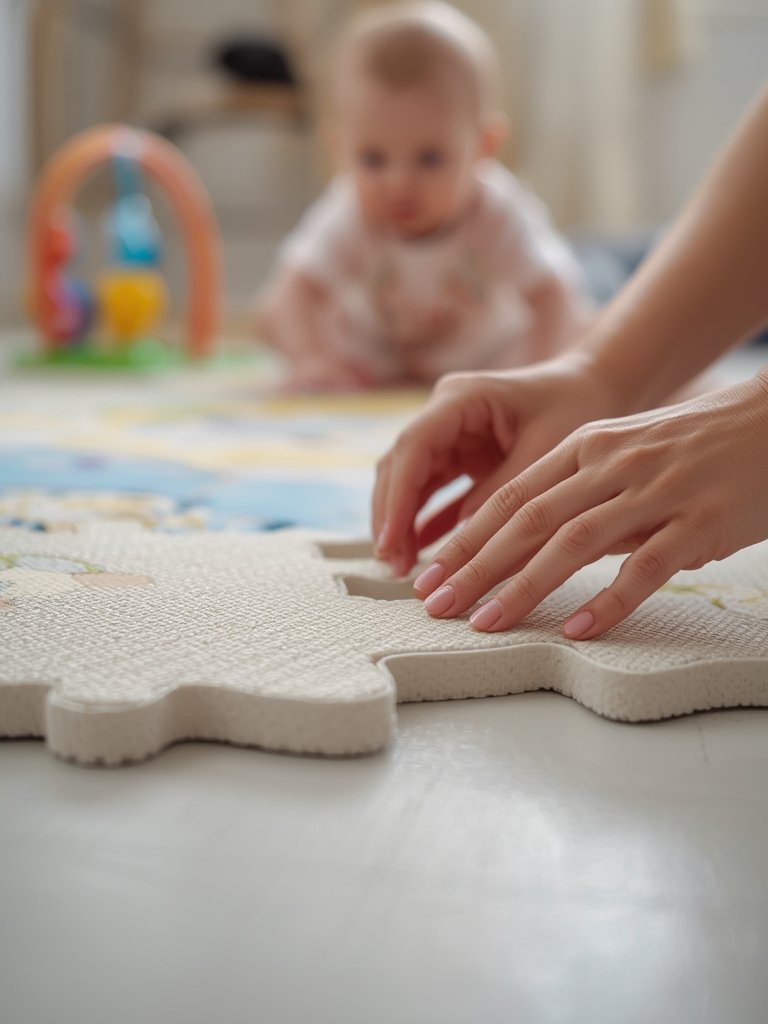
- Cleaning & Maintenance: Foam can trap crumbs and dust. Use a handheld vacuum weekly, or wipe with a damp cloth and gentle, mild, unscented soap. If using a cotton or fabric mat, wash covers weekly in hot water.
- Bonus Tip on Resale: Mats with removable, machine-washable covers, or ultra-durable, closed-cell EVA foam (properly certified), hold value best on the second-hand market.
For a deeper dive on healthy toddler spaces, read about safe sleep practices and crib safety, or check out choosing baby strollers for safe outdoor play.
Advanced Analysis & Common Pitfalls (What Most Parents Miss)
Despite all the marketing, baby play mat foam is not risk-free, even if labeled “non-toxic.” Here are the most realistic (and overlooked) problems:
| Material | Durability | Safety Profile | Potential Pitfalls |
|---|---|---|---|
| Formamide-free EVA Foam | High (tight puzzle seams, long wear) | Low formamide & VOCs if certified | Cheap brands may skirt certification; odors/loss of shape in sun |
| GOLS Natural Latex | Moderate-high (elastic, but can degrade) | No phthalates/formaldehyde, hypoallergenic | Can trigger latex allergies; less resilient over years |
| GOTS Organic Cotton | Moderate (mostly covers, can stain/tear) | No pesticides; soft | Absorbs spills; mats get lumpy if filling shifts |
| Polyurethane | Variable | Risk of PBDEs, VOCs | Linked to respiratory issues; increasingly banned |
- Odor/Off-Gassing: Mats containing formamide, improperly cured EVA, or polyurethane may “off-gas” for weeks after unboxing. Strong odor is a telltale warning.
- Cleaning, Dirt, and Mold: Puzzle seams are magnets for dirt, crumbs, and liquid spills. Unless mats are cleaned weekly, mold or mildew can develop—especially on the underside.
- Certification Lapses: Brands sometimes change suppliers but don’t update test certifications. If the certificate date is old, request a new one or avoid.
- Surface Wear: EVA foam can lose resilience and become thin over time, especially with heavy usage or after multiple cleanings with harsh chemicals.
- Allergies: Latex is natural but can trigger allergies in sensitive children. Proper allergen labeling is still not universal.
- Resale Value: Many mats can’t be resold due to permanent stains or padding breakdown. Consider this if you plan to recoup costs or pass your mat to another family.
Despite ongoing debates about formamide, there have been no major play mat recalls in recent years (source). But standards keep tightening, so check regulations regularly.
For broader coverage on supporting your baby’s development, see our guide to baby developmental milestones or learn about the importance of safe baby sleep sacks.
Conclusion
When choosing baby play mat foam, prioritize third-party certifications, proven safety, and robust cleaning options—not just bright colors or trendy marketing. Stick to certified, non-toxic foam, latex, or cotton, and be realistic about everyday messes, potential allergies, and long-term durability. The safest choice for your family comes from research, not guesses. Don’t compromise—always demand proof of safety and quality before your baby ever touches the mat.
Ready to upgrade your baby’s play area? Choose a play mat with trusted certifications, double-check that it’s truly non-toxic, and care for it regularly. For more child safety tips and honest product guides, explore our site or share this baby play mat foam guide with parents who want peace of mind!
FAQ
Do all baby play mat foam products need to be certified?
Yes, in the US, UK, and EU, all baby play mat foam products must meet mandatory safety standards. Look for ASTM F963 (US), REACH (EU/UK), and certifications like OEKO-TEX Standard 100, GOTS, or GOLS for reassurance.
How do I know if a foam play mat is non-toxic?
Ask for third-party safety test reports and certifications—don’t rely on product claims alone. Formamide-free EVA, GOLS latex, or GOTS organic cotton with recent lab results are the safest bets.
What’s the safest way to clean baby play mat foam?
Wipe EVA foam mats with a damp cloth and mild, unscented soap. Vacuum puzzle seams weekly. Wash cotton covers on hot with gentle detergent. Avoid bleach or harsh chemicals to preserve material integrity.
Why does my new foam mat smell strong?
A strong chemical odor often signals off-gassing from formamide or VOCs. This is most common in non-certified EVA or polyurethane mats. If the smell persists for more than a day, consider returning the product.
Are there baby play mats that are both eco-friendly and durable?
Yes—look for GOTS or GOLS-certified brands, which use organic materials and transparent supply chains. Certified EVA foam mats can be durable, but ensure they’re formamide-free and have lab test results.
[…] time is crucial. Soft, stable surfaces like non-toxic play mats encourage safe exploration and repeated […]
[…] 💡 Pro Tip: Always check if the walker has a wide, sturdy base and meets existing safety certifications, even if specific 2024 regulations have not been updated. Avoid using walkers near stairs, pools, or other hazards, as regulations may vary. 🔥 Hacks & Tricks: Place a non-slip play mat or foam tiles beneath the walker to reduce mobility and boost safety—this hack transforms a mobile walker into a safer, stationary activity center for supervised play. For play mat options, check out tips on safe foam play mats. […]