

Focus Keyword: baby travel stroller
Choosing the best baby travel stroller can make or break your experience as a parent on the move. Between navigating airports, city streets, or just a crowded café, having a compact, safe, and easy-to-use stroller quickly becomes a necessity, not just a convenience. But with so many options, confusing specs, and changing trends, how do you pick the right one for your baby—and your lifestyle?
Key Takeaways
- The global baby travel stroller market is booming, with lightweight and compact models leading growth into 2024 and beyond.
- Parents should consider portability, safety, and real-world usability—not just price—when choosing a stroller for travel.
- Features and regulations are evolving, but specifications can be hard to compare; focus on durability, ease of use, and compliance with safety standards.
- Understanding Baby Travel Strollers
- How to Choose the Right Baby Travel Stroller: Step by Step
- Advanced Analysis & Common Pitfalls
- Conclusion
- FAQ
Understanding Baby Travel Strollers
Baby travel strollers are designed to make outings with your little one safer, smoother, and less stressful. What sets a travel stroller apart from a standard model is its compact size, lightweight construction (often under 10 pounds), and foldability—perfect for city life or frequent trips. With projected sales of over USD 4.1 billion in 2024, these strollers are more popular than ever, thanks to growing trends in urban mobility and the need for practical solutions for busy families.

Why do parents gravitate toward travel strollers? Portability and storage are the biggest draws: lightweight frames, one-hand folds, and smaller footprints make it easy to navigate narrow airplane aisles or stash the stroller under a table. Online sales now exceed 40% of all sales, enabling access to premium models with features like all-wheel suspension and integrated travel systems (Future Market Insights). Still, not all strollers are created equal, and understanding what really matters can help you completely avoid buyer’s remorse.
How to Choose the Right Baby Travel Stroller: Step by Step
Follow these actionable steps to pick the best travel stroller without getting lost in a sea of specs and marketing claims.
Step 1: Define Your Needs
Think about your main travel modes. Are you commuting on foot, flying, or mostly driving? Compact strollers are best for air and city travel, while all-terrain strollers may be better for rough sidewalks or trips to the park. For sleep on the go, check if the stroller reclines flat or supports a bassinet—safety guidelines like those in our toddler bed safety article apply here too.
Step 2: Weight and Folded Dimensions Matter
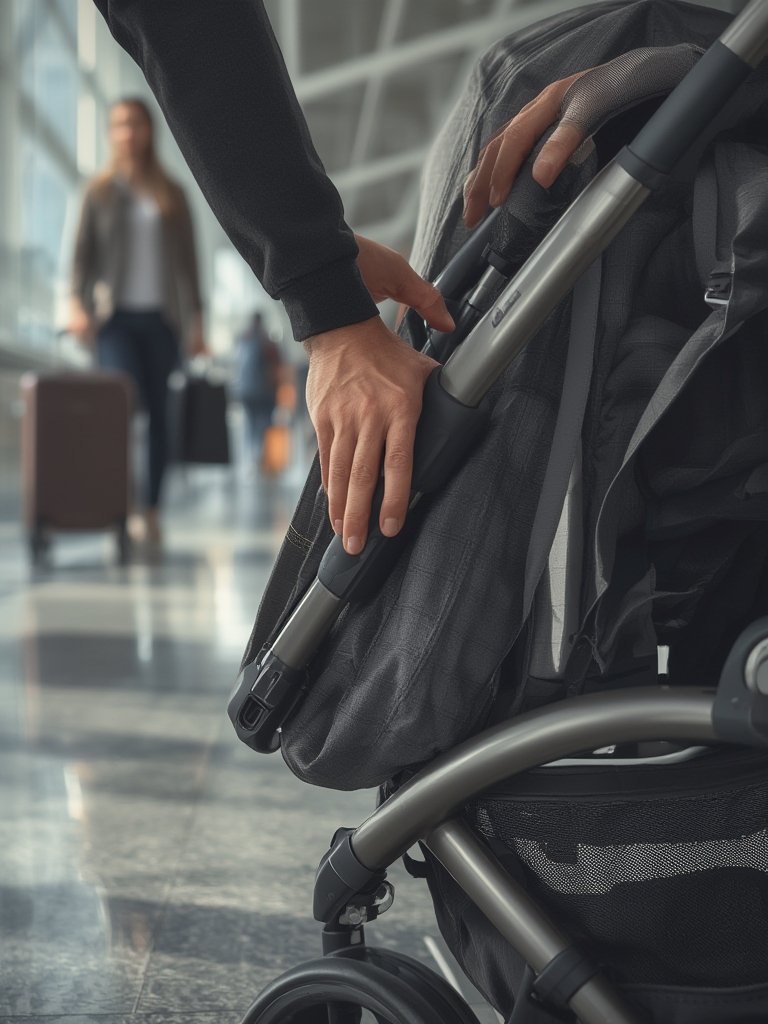
Lightweight strollers typically weigh under 10 pounds and fold down small enough to fit in overhead bins (always check airline restrictions, though). Models like these are easier to carry long distances or lift onto public transport.
Step 3: Safety and Compliance
Look for features that support stability and restraint, like secure harnesses, reliable brakes, and wide bases. Reputable models made after 2024 may comply with EN 1888-3:2024, a new benchmark for baby stroller safety, especially in jogging variants. To dive deeper into stroller system safety, see our analysis in Choosing the Best Stroller Travel Systems.
Step 4: Age and Weight Suitability
Many travel strollers accommodate infants with car seat adapters or from around 6 months up to 45 pounds. Always check for clear labeling and real age suitability—some models may claim universal fit but offer limited support for newborns. If you’re managing a growing family, internal organizers or larger baskets—like those recommended in our toy storage guide—can make outings smoother.
Step 5: Value for Your Budget
High-end lightweight strollers can run above $1,000, but if your travel is occasional, filter for core features over luxury add-ons. Prioritize strong builds and essential comforts. You might consider direct-to-consumer models, as these raise average selling prices but often increase warranty and after-sales support.
Step 6: Test in Real Scenarios
Whenever possible, wheel the stroller in a store or on different surfaces. You’ll want to check if it is truly “one-hand fold” and if it fits easily in your car trunk or hallway closet. If investing in other baby care gear, pairing it with products like a 360-degree baby car seat or a front baby carrier can also streamline your routines.
Advanced Analysis & Common Pitfalls
Market trends in 2024 point to massive growth in the lightweight and ultra-compact baby travel stroller segment, but real-world usability and satisfaction lag if you miss these pitfalls:
Common Pitfalls When Buying Travel Strollers
- Overlooking True Portability: Some “lightweight” strollers are still bulky when folded, making them cumbersome for air travel or storage. If folded dimensions aren’t provided, ask or look for real user videos.
- Neglecting Terrain and Durability: Wheels on ultralight models may not handle uneven pavement or cobblestones. If you plan outdoor adventures, consider a stroller with suspension or more robust tires.
- Assuming Safety Standards: Not all strollers meet current benchmarks. Always check for recent compliance—like EN 1888-3:2024 certification or equivalent local standards.
- Missing Real Age Suitability: Claims about “newborn readiness” often lack adequate back or head support without inserts. When in doubt, choose models that allow a secure, flat recline for younger babies.
- Ignoring Negative Feedback: While direct complaints are scarce in recent reports, user reviews on retailer sites can reveal recurring annoyances such as sticky wheels, hard-to-clean fabrics, or weak brakes. For broader guidance on baby gear ownership pitfalls, check our parenting tips post.
Comparison Table: Key Attributes (Sample Data)
| Attribute | Premium Lightweight Stroller | Budget Compact Stroller |
|---|---|---|
| Weight | 8-10 lbs | 10–16 lbs |
| Folded Dimensions | 18″ x 12″ x 7″ | 24″ x 15″ x 10″ |
| Car Seat Adapter | Included or Optional | Rarely Included |
| Suspension | All-wheel (premium) | Front wheels only |
| Approximate Price | $400–$1000+ | $100–$350 |
Conclusion
The right baby travel stroller should fit both your baby’s needs and your lifestyle—no compromises. Focus on portability, real safety standards like EN 1888-3:2024, and durability—especially when investing in a model you’ll use for years. Don’t be swayed by trends or luxury features unless they’re genuinely useful for your daily routine or travel plans. Ready to make parenting on-the-go a lot easier? Start by comparing top-rated baby travel strollers that meet both your safety standards and your travel needs.
FAQ
What’s the main benefit of a baby travel stroller compared to a regular stroller?
Baby travel strollers are designed to be lightweight, compact, and easy to fold for quick transport and storage. This makes them ideal for families who travel frequently or live in urban environments.
Are lightweight travel strollers as safe as full-size models?
Many are, provided they meet current safety standards like EN 1888-3:2024. Always check for a secure harness, reliable brakes, and a stable frame.
Can I use a baby travel stroller for a newborn?
Some travel strollers support newborns with adapters or bassinets. However, not all offer proper support for infants under 6 months. Always check age suitability or consider using a car seat attachment.
Will a compact stroller fit in an airplane overhead bin?
Many models on the market are designed to meet airline carry-on guidelines, but sizes vary. Always confirm your chosen stroller’s folded dimensions and your airline’s policies before flying.
What features matter most when shopping for a travel stroller?
Prioritize light weight, one-hand fold, strong brakes, reliable harness, and compatibility with car seats or bassinets as needed. Extra features like canopy coverage and suspension can add comfort but aren’t always essential.