

Imitation toys 12-18 months are not just about fun—they are vital tools for boosting early learning, helping toddlers copy real-world actions, and supporting social growth during a key phase of development.
Key Takeaways
- Imitation toys for 12-18 months play a direct role in motor skills, social behavior, and early language development.
- Top competitor guides often ignore crucial topics like safety certifications, parental concerns, and price comparisons.
- Choice and demonstration matter—experts recommend toys that reflect real-life actions and match milestones for this age.
- What Are Imitation Toys for 12-18 Months and Why Do They Matter?
- How to Choose and Use Imitation Toys: A Parent’s Step-by-Step Guide
- Pitfalls, Missing Information, and Real-World Issues: What Parents Need to Know
- Conclusion: Getting Real Results with Imitation Toys 12-18 Months
- FAQs about Imitation Toys 12-18 Months
What Are Imitation Toys for 12-18 Months and Why Do They Matter?
Imitation toys for 12-18 month-olds are designed to let toddlers copy the actions, sounds, and routines they see around them—like pretend kitchen sets, toy phones, play tools, and stuffed animals. These toys encourage little ones to mimic adult behaviors, helping them understand social roles and simple problem-solving.

Why does this imitation matter at 12-18 months? At this age, children’s brains are wired to absorb information quickly by watching and copying. Research confirms that toddlers as young as one year use imitation to make sense of actions and social cues, learn motor tasks, and even evaluate how others behave. Recent studies highlight the link between imitation play and social-emotional growth, including the ability to build relationships through shared activities.
General benefits proven by developmental research—spanning 6-months to 4-years—include faster learning, improved hand-eye coordination, and the development of communication skills. Imitation play accelerates new skill acquisition because children learn directly by doing, not just by being told.
Looking for toys that help your toddler hit more milestones? Explore this in-depth guide to toddler toys for 12-18 months as a next step.
How to Choose and Use Imitation Toys: A Parent’s Step-by-Step Guide
Arming yourself with the right approach to imitation toys gives your child the best shot at learning through play. Here’s how to get the most from these toys, even with limited space and budget.
1. Match Toys to Milestones
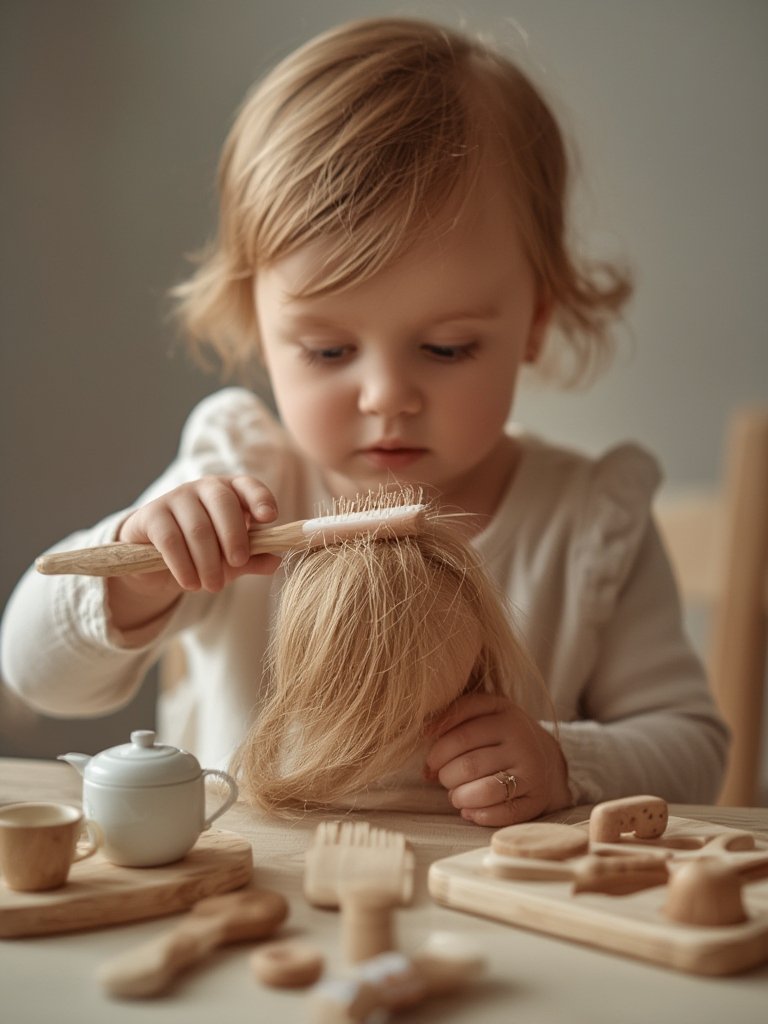
Select toys that fit your child’s current stage. At 12 months, toddlers often enjoy simple pretend acts like “feeding” a doll or using a pretend phone. By 18 months, they may begin combining toys (“pouring” from a toy teapot into a cup).
- Look for toys that model everyday routines (kitchen, vacuum, tool bench, animal figures).
- Choose items that require hands-on interaction: buttons to press, lids to open, or actions to mimic.
2. Demonstrate, Don’t Just Direct
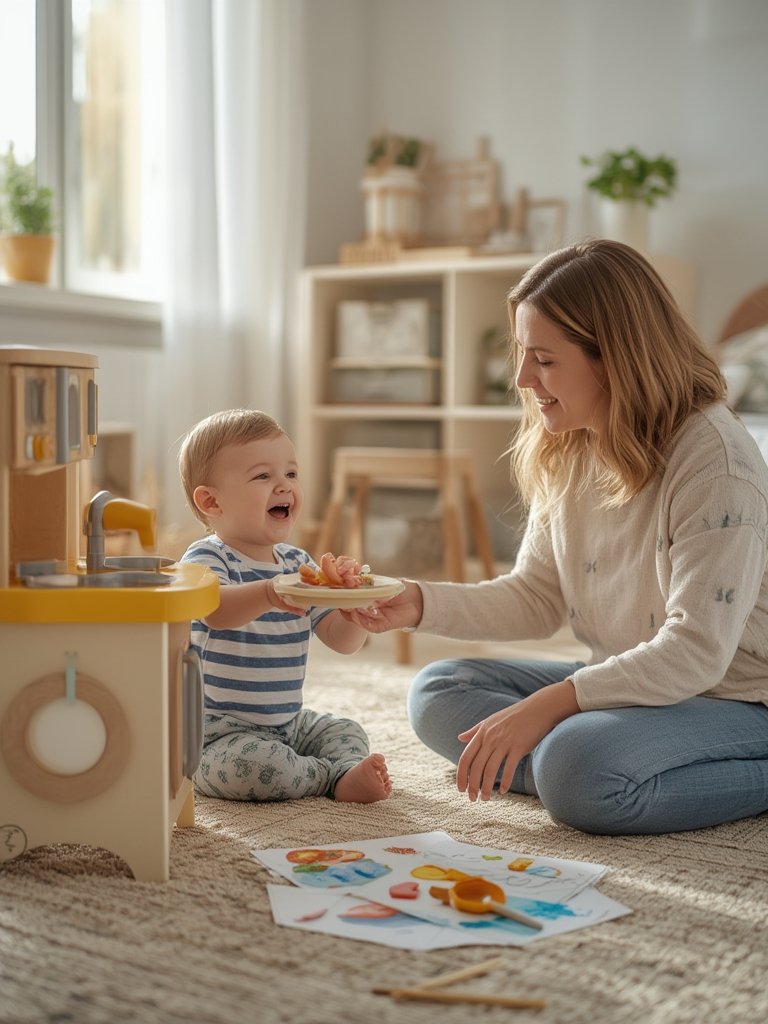
Show your toddler how to use each imitation toy by modeling the action—feeding a teddy bear, stirring in a play pot, or “driving” a toy truck. Toddlers learn best when they see you do it first. Expert guides emphasize the power of demonstration for language and conceptual development.
3. Create Low-Pressure Play Scenarios
Let your child explore at their own pace. Resist the temptation to intervene if they don’t use the toy exactly as intended—exploration is key for discovery and developing flexibility.
4. Prioritize Safety and Durability
Even without detailed public data on safety certification for imitation toys in the US and EU, always opt for toys labeled for ages 12m+ with no small parts, sharp edges, or toxic finishes. If you need a deeper dive into practical ways to keep your child safe, check out this resource on Safety and Durability and apply similar logic to toy selection.
5. Organize, Store, and Clean Regularly
Organization not only prevents clutter but helps children see their play options and promotes independent choice. For easy, safe, and practical toy storage tips, explore our kids toy storage guide.
Pitfalls, Missing Information, and Real-World Issues: What Parents Need to Know
No guide is complete without a realistic look at the gaps and potential missteps in choosing imitation toys for toddlers. Here’s where most advice falls short—and what you can do about it.
1. Safety Certifications Remain Opaque
Unlike categories such as car seats or cribs, public information about safety standards and brand compliance for imitation toys is lacking. None of the top resources cover which certifications (ASTM, EN-71) should appear on packaging or how major brands comply with them. Parents are left needing to trust manufacturers, so always inspect toys yourself.
2. Unreported Parental Frustrations
There’s no easily accessible data on parent-reported issues, but common sense and anecdotal reports suggest potential problems:
- Toys breaking or cracking under pressure.
- Loose pieces or stickers that could become choking hazards.
- Lack of interest—children sometimes prefer household objects.
Review age suggestions and read real user reviews where available before buying.
3. No Price Transparency
Top reviews rarely compare costs across retailers. Be prepared for wide price swings, especially for branded or “set” style toys. Price check major outlets before purchasing, or consider open-ended toys that grow with your child’s interests.
| Feature | Ideal Scenario | Potential Pitfall | How to Address |
|---|---|---|---|
| Materials/Durability | Solid wood/plastic, no small parts, non-toxic paints | Cracking, sharp edges, chips, loose parts | Inspect regularly and select trusted brands |
| Engagement | Child returns to toy often, tries out new play acts | Boredom, ignoring the toy | Limit available toys and swap regularly |
| Safety Compliance | Meets ASTM or EN-71, age-appropriate labeling | Missing, unclear, or fake safety labels | Research brands, inspect labels in person |
Want more on milestones and toddler behaviors? Our post on baby development milestones covers each stage in detail.
Older siblings sometimes engage in rough play—including with baby’s imitation toys. Read about healthy toddler behaviors for practical ways to coach and manage safe play between different ages.
Conclusion: Getting Real Results with Imitation Toys 12-18 Months
The bottom line: Imitation toys 12-18 months help spark physical, social, and language growth for your child’s critical second year. However, safety standards aren’t always clear, and engagement depends as much on modeling and choice as on the toy itself. Use demonstration, rotation, and regular safety checks to maximize the benefits—and don’t be afraid to swap in household objects or switch toys every week. Ready to support your toddler’s leap into pretend play? Choose with care, observe your child’s interest, and watch their world open up.
Take the next step now: Review your toy collection, model new routines, and see what skills blossom next.
FAQs about Imitation Toys 12-18 Months
What are examples of good imitation toys for 12-18 month-olds?
Kitchen sets, toy phones, tool benches, doctor kits, animal figures, and plush dolls are all excellent options for imitation play at this age. Choose toys that let your child mimic daily routines and social roles.
How do I know if an imitation toy is safe?
Look for toys labeled 12 months+, with no small detachable parts, no sharp edges, and made from non-toxic materials. Reliable brands often publish compliance with standards like ASTM F963 or EN-71, but always inspect for loose pieces before giving the toy to your toddler.
What if my child doesn’t seem interested in imitation toys?
Try modeling the action yourself and rotating the available toys each week. Toddlers’ interests shift quickly, and even household objects can spark new pretend scenarios. Following your child’s lead can make playtime more engaging.
Are there any toys I should avoid for 12-18 month-olds?
Avoid toys with small detachable parts, anything with button batteries, or those made for older age groups (often marked 3+). Steer clear of painted toys without visible safety labeling or those with stickers that can peel off.
Do imitation toys help with language development?
Yes, imitation toys support early language development by encouraging toddlers to practice words, mimic sounds, and follow simple instructions. Demonstration and play together boost the effect.