


Choosing toys month by month is the smartest way to match your baby’s fast-changing development with the safest, most engaging play options. But despite a huge market, clear, month-specific guidance is rare and most expert advice is broad and vague. Here’s what you actually need to know to confidently pick toys for every stage in your baby’s first year.
Key Takeaways
- Most expert toy guides group recommendations in age ranges, not month by month, but breaking it down monthly helps target your baby’s unique development pace.
- Safety, developmental fit, and simplicity matter far more than big price tags or tech features, especially in the first year.
- Consumer confusion and overlap can be avoided by following expert checklists and ignoring one-size-fits-all marketing claims.
- What Does Choosing Toys Month by Month Really Mean?
- Step-by-Step Guide: How to Choose Age-Specific Toys Month by Month
- Advanced Analysis & Common Pitfalls
- Conclusion
- FAQ
What Does Choosing Toys Month by Month Really Mean?
Choosing toys month by month means selecting playthings that match your baby’s exact developmental stage for every month in the first year, rather than just picking by broad age ranges. This approach gives your baby a running start on skills like reaching, crawling, grasping, and early communication. In reality, mainstream guides—like those from Seattle Children’s Hospital—group recommendations by age brackets: 0-6 months, 6-9 months, and 9-12 months. But babies change quickly, and splitting recommendations by month prevents under- or over-challenging your child.

Why does this approach matter? It helps avoid wasted money on premature gadgets or unsafe items. It also keeps playtime in sync with skills like hand grasping (around 2-3 months), sitting (5-7 months), crawling, and early words, each needing different toys. Parents get less overwhelmed and babies build confidence with the right tools at the right time. For more on baby milestones, check out our baby milestones month by month guide.
Step-by-Step Guide: How to Choose Age-Specific Toys Month by Month
Ready to choose smarter? Here’s how to break down toy selection for each month, using expert recommendations adapted for real families.
Month-By-Month Breakdown
0-1 Months: Newborns mostly observe. Choose safe, soft sensory items—think high-contrast black-and-white cards, unbreakable mirrors, and crinkle fabric. Avoid anything with small parts, batteries, or rigid plastic.
2-3 Months: Babies begin tracking movement and responding to sound. Use soft rattles, simple cloth books, and hanging mobiles visible from the floor or crib (but remove mobiles as soon as your baby can reach them). For more gear, see our baby milestone tracker guide.
4-5 Months: Grabbing and mouthing begin. Now’s the time for teethers, easy-to-hold ring sets, squeeze toys, and textured balls. Suction toys that stick to high chairs or floors let little ones practice cause and effect. Always supervise play with new objects.
6-7 Months: Independent sitting means more floor play. Offer soft blocks, lightweight balls, pop-up toys, and larger items to pass hand-to-hand. Avoid jumpers or walkers; they can hinder natural movement (expert warning here).
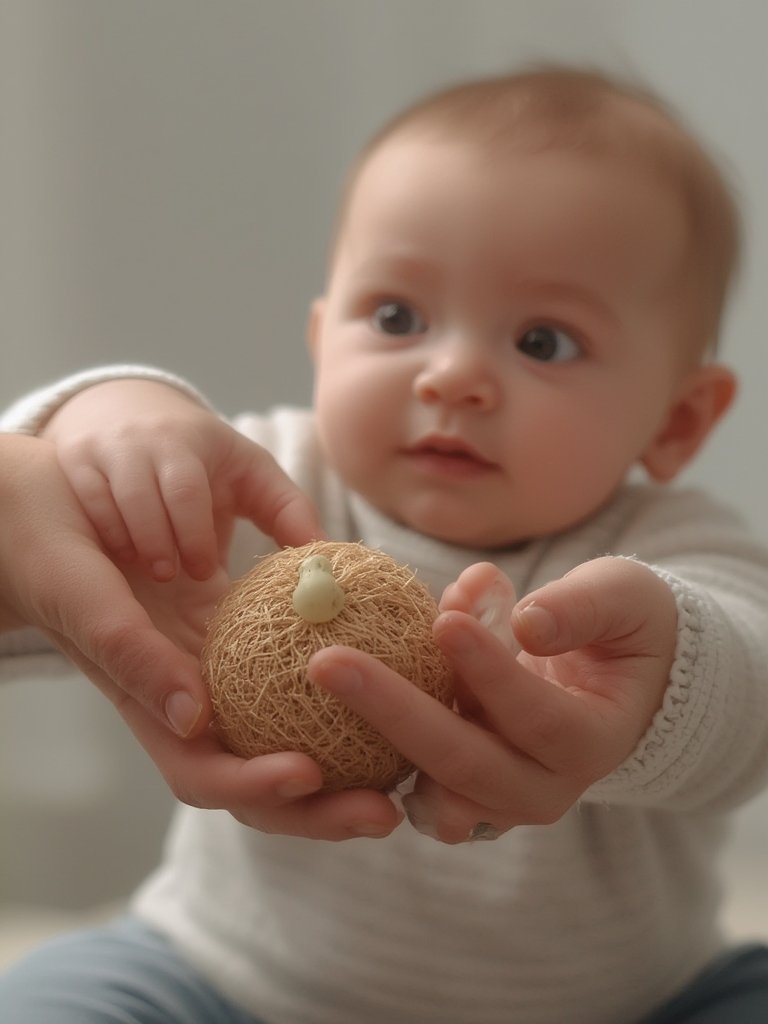
8-9 Months: Crawlers love activity cubes, push-cars, soft dolls (no loose items!), and fabric books. Short-string pull toys (<7 inches only), pop-up boxes, and floortime play centers are ideal. For safe floor play, see our baby play mat safety advice.
10-12 Months: Look for open-ended, persistence-driven toys: stacking cups, bead mazes, cause-effect activity tables, and chunky blocks. Avoid anything with pinched parts or removable batteries. Simple push/pull walkers are OK if your baby is already standing on their own, but avoid walkers with wheels for pre-walking babies.
As a cross-check, compare developmental skills to toy features—babies approaching sitting need “reach and grab” toys, crawlers need “track and chase” toys, and soon-to-walkers need “pull up and move” options. Reference the pediatric therapy checklist here to double-check safety.
Safety Checklist (Always Apply)
- No small parts or loose pieces (avoid choking hazards at every stage)
- Pulled strings/cords shorter than 7 inches
- No glass, electrical, button/disc batteries, or sharp edges
- Non-toxic, wipeable materials; soft textures preferred
- Remove toy bars/gyms once baby can pull up independently
See a roundup of the top trending baby toys for 2024 for more inspiration.
Advanced Analysis & Common Pitfalls
Despite best intentions, choosing toys month by month is harder in practice than it looks. Here’s what commonly goes wrong, and how to dodge the traps:
Common Pitfalls
- Overfilling the play space. Too many toys can overstimulate or distract—babies prefer just 2-3 options at a time.
- Ignoring milestones. Buying advanced toys early (like walkers for a 5-month-old) risks safety and delays milestone progress. For comparison, see our toys by developmental stage guide.
- Missing safety recalls. Always check for recent toy recalls and choose brands following U.S. safety standards. See full expert recommendations here.
- Overvaluing tech or expensive toys. Babies benefit most from safe, simple, open-ended items like blocks, balls, and fabric books; no research shows monthly upgrades or gadgets hasten development.
| Age (Months) | Recommended Toy Types | Major Risks | What to Avoid |
|---|---|---|---|
| 0-2 | High-contrast cards, unbreakable mirrors, soft/cloth books | Choking, suffocation | Small stuffed toys with eyes or batteries |
| 3-5 | Soft rattles, teethers, ring sets | Toxic plastics, loose parts | Teethers with gels/liquids, mobiles after rolling begins |
| 6-8 | Soft blocks, pop-up toys, activity mats | Pulled cords, unstable jumpers | Jumpers, baby walkers, string toys over 7″ |
| 9-12 | Stacking cups, push-pull toys, bead mazes | Choking on small parts, finger pinches | Loose batteries, toys with sharp edges |
Another big hurdle: there’s almost no published science proving that buying toys month by month creates faster cognitive or motor development, though matching toys to stages matters. So don’t stress if your baby prefers a cardboard box to a pricey gadget.
If you need tips on toy storage as your collection grows, check out our toy storage solutions guide.

Conclusion
Matching your baby’s toys to each month is possible—and valuable—with the right mindset. Use checklists, observe your child’s changing abilities, keep safety front and center, and focus less on hype or monthly spending. The real secret: simplicity, rotation, and following your baby’s lead. For even more support on choosing toys month by month, explore our in-depth coverage and checklists across our full toy guide for parents.
Ready to make playtime both safe and exciting? Start with these steps, check expert lists, and trust that your child is learning from every moment of discovery! Share your experiences or tips below to help other parents choose toys month by month.
FAQ
Is it necessary to buy new toys every month for my baby?
No. Instead, rotate a few well-chosen toys that match your baby’s changing abilities. Many safe, simple items grow with your child across several months.
How do I know if a toy is safe for my baby’s age?
Check for labels that match or exceed safety standards (like ASTM, CPSIA), make sure there are no small or loose parts, avoid cords longer than 7 inches, and always inspect toys for damage. For the latest, see expert safety advice from Seattle Children’s Hospital.
What toys help the most with my baby’s development?
Simple, open-ended toys are best: blocks, stacking cups, rattles, balls, cloth books, and anything that encourages reaching, mouthing, tracking, and movement. These support all major milestones from rolling to walking.
Can expensive or tech toys accelerate baby learning?
No research shows expensive or high-tech toys work better than classic, safe objects. Babies learn through real-life exploration, not screens or batteries.
Where can I find more resources for choosing safe baby toys?
Review our trending 2024 baby toys list, and see expert-backed guides like Seattle Children’s Hospital toy safety.