

### Blog Post:
Formula feeding schedule is one of the most searched topics for new parents trying to provide the best care while juggling day-night chaos. If you’re not sure how much, how often, or when to feed your baby formula—and what truly works in real life—this full guide delivers clear answers plus actionable tips and expert-backed scheduling strategies fit for 2024.
Key Takeaways
- Responsive, cue-based formula feeding is now the norm—flexibility matters more than strict clocks.
- Actual feeding amounts and schedules shift fast during the first year, especially as you add solids around 6 months.
- Common struggles include night wakings, growth spurts, and unpredictability—track patterns but expect some chaos.
- What Is a Formula Feeding Schedule and Why Does It Matter?
- How to Build (and Maintain) a Formula Feeding Schedule
- Advanced Analysis: Real-World Pitfalls & Solutions
- Conclusion
- FAQ
What Is a Formula Feeding Schedule and Why Does It Matter?
A formula feeding schedule is an approach to plan when and how much formula to offer your baby, based on cues and age-stage needs. The “why” is obvious to any sleep-deprived parent: a predictable feeding routine can help you plan your day, support the baby’s growth, and manage common feeding hiccups.

According to the CDC and AAP, formula feeding schedules now emphasize responsive, cue-driven feeding rather than strict timing. Still, general guidelines by age help set expectations:
- 0-1 month: 1-2 oz every 2-3 hours (8-12 times in 24 hours). May require gentle waking for feeds.
- 1-2 months: 4-6 oz per feed, 6-8 feedings daily.
- 2-4 months: 6-7 oz, 5-6 feedings per 24 hours.
- 4-6 months: 28-32 oz divided across 4-6 feedings (may begin solids).
- 6-12 months: Formula 3-5 times daily along with steadily increasing solids.
These numbers are a starting point. Each baby’s needs change during growth spurts, illness, or routine disruptions. The most up-to-date scientific perspective guides you to watch for hunger cues, not just the clock, to keep your baby fed and thriving (Nationwide Children’s Hospital).
When it comes to sleep and feeding routines, see our structured newborn sleep schedule guide for more on integrating feeding and sleep.
How to Build (and Maintain) a Formula Feeding Schedule
Establishing a working formula feeding schedule happens in phases. Here’s a straightforward, actionable approach that adapts as your infant grows:
- Learn hunger/fullness cues. Early signals: stirring, sucking motions, hand-to-mouth. Crying is usually a late sign. Stop feeding if baby turns away or slows sucking—even if the bottle isn’t empty.
See expert guidance at Fed is Best’s feeding plan for trackable signs. - Adapt the schedule by age.
- Under 2 months: typically 2-4 oz every 2-4 hours (wake for night feeds as needed).
- 2-4 months: about 5-7 oz every 4 hours (drops night feeds gradually as baby grows).
- 6-12 months: 24-32 oz/24 hr, split across 3-5 feedings as you add more solids.
For a deeper breakdown, refer to the CDC’s up-to-date guidance.
- Emphasize daytime feeds to reduce night wake-ups. Offer more formula during daylight to encourage better night sleep. Learn more strategies in our how to make baby sleep through the night tips.
- Build in flexibility for regressions and growth spurts. Babies may cluster feed or need more frequent bottles—especially during leaps or sleep disruptions. Expect some unpredictability: schedules are templates, not rules.
- Transition to solids slowly at 6 months. Start with iron-fortified cereal and purees, as advised by most pediatricians. Drop formula feeds gradually, not all at once. For more on introducing solids, check our baby food maker guide.
- Consult your pediatrician about total daily ounces and feeding frequency. Growth patterns, weight changes, or developmental delays may call for adjustments.
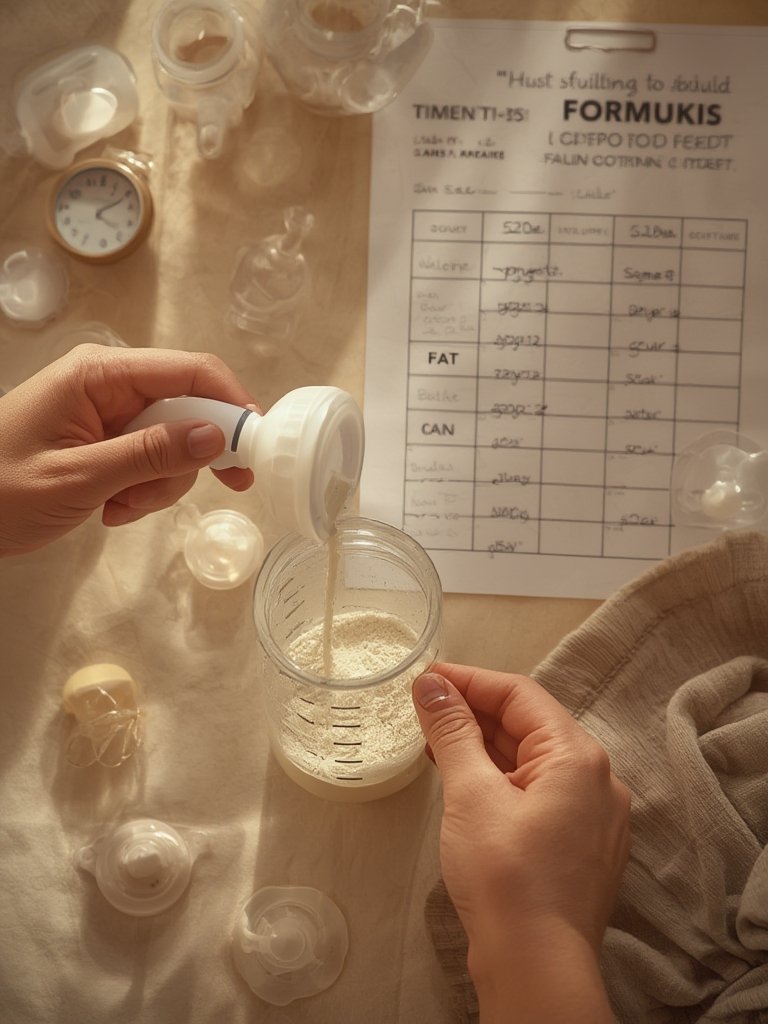
- Bonus: Night feed shortcuts and nap-friendly scheduling. Prep bottles before bed. Keep bottle, formula, and water by the crib (if safe). For nap and sleep regression tips, see our comprehensive baby sleep regression guide.
- Always observe for satiety and avoid pressuring baby to finish a bottle. If baby regularly takes less or much more than guidelines, discuss with your doctor.
Advanced Analysis: Real-World Pitfalls & Solutions
No schedule is perfect—or stays that way long. Here are common pitfalls with evidence-informed strategies to resolve them:
| Problem | Why It Happens | What To Do |
|---|---|---|
| Overfeeding | Misreading hunger cues; always finishing bottle even when baby’s full. | Watch for turning away, slower sucking, and don’t force to finish. Consult doctor if spit-up or rapid weight gain persists. See AAP Guidance. |
| Underfeeding | Assuming all babies eat the same amount; baby tires out before finishing. | Offer feeds more often if growth is slow; check bottle nipple flow; discuss with pediatrician about intake and possible medical concerns. |
| Feeding refusals | Teething, illness, or development; unfamiliar formula bottles or fast transition to solids. | Try smaller, more frequent feeds; change temperature or bottle type (see our anti-colic baby bottle guide); give time for adjustment. |
| Night wakings (after newborn stage) | Habitual feeding, not true hunger; not enough daytime feeding. | Shift formula intake to daytime, gradually reduce night bottles. Learn more at our detailed baby sleep schedule by age tips. |
| Schedule & nap clashes | Bottle timings conflict with nap routine. | Feed after nap wake-up, not right before; create a flexible routine. See baby care tips for aligning feeding and sleep cycles. |
Some families encounter challenges unique to their situation, like mixed breast/formula feeding or cultural meal rhythms. These aren’t well-covered by most top guides but can deeply affect your day-to-day. Discuss combination feeding strategies with your care provider for tailored advice.
Other logistics—like formula cost, prep time, and whether on-demand or scheduled feeding fits better—often depend on family lifestyle and baby temperament, rather than clinical evidence.

Conclusion
A formula feeding schedule helps organize your days, keep your baby well-fed, and track growth. But the real secret is building in flexibility—let your baby’s cues guide you, tweak schedule details as needed, and use tools like feeding logs and pre-prepped bottles to make life easier.
Ready to set up your own schedule or pivot from frustration? Track your baby’s patterns this week, have a candid talk with your pediatrician about any concerns, and bookmark this page for future reference. Share your questions below or check out our breastfeeding tips for beginners or best organic formula picks for more feeding wisdom.
FAQ
How often should I feed my newborn formula at night?
In the first month, most newborns need formula every 2-3 hours, around the clock. This often means 2-3 night feedings (or more). As your baby grows, night feeds typically reduce after 2-4 months, but always follow hunger cues.
How will I know if my baby is eating enough formula?
Steady weight gain, regular wet diapers (at least 6 per day after the first week), and baby appearing satisfied after most feeds are good signs. If unsure, track ounces consumed and discuss patterns with your pediatrician.
Can I mix formula feeding with breastfeeding or solids?
Yes, combination feeding is common—add solids gradually around 6 months. Plan formula bottles around nursing and solid meals, but introduce new foods or changes one at a time for easier tracking.
What if my baby refuses a bottle or changes their schedule suddenly?
This is common during teething, illness, or development leaps. Try offering smaller bottles more often, adjust temperature, or try a new bottle nipple. Most refusals pass with time, but mention ongoing issues to your baby’s doctor.
Is it okay if my baby’s feeding schedule doesn’t match the textbook?
Every baby is different. As long as your baby is gaining weight and seems content, don’t stress about matching an exact schedule. Flexibility and watching for hunger cues always win over strict timing.
—