

Baby acne is one of the most common infant skin conditions—and it often surprises new parents. Unlike teenage acne, this usually shows up in the first weeks or months of life. If you’re staring at red bumps on your baby’s cheeks, chin, or forehead, this guide gives you clear answers and proven steps to deal with it safely and effectively.
Key Takeaways
- About 20% of newborns develop baby acne—most cases clear up on their own with gentle care and patience.
- Late-onset acne (after 6 weeks) is rare and should be checked by a pediatric dermatologist for underlying health issues.
- Avoid scrubbing, home remedies, or acne creams without medical supervision. Stick to lukewarm water, mild, fragrance-free baby soap, and non-greasy skincare.
- What Is Baby Acne and Why Does It Happen?
- Step-by-Step: How to Care for Baby Acne Safely
- Advanced Analysis and Common Pitfalls
- Conclusion
- Frequently Asked Questions
What Is Baby Acne and Why Does It Happen?
Baby acne refers to red or white bumps, sometimes with a little inflammation, that appear on a newborn’s face—particularly the cheeks, forehead, and chin. It’s a widespread condition: roughly 1 in 5 newborns develop what’s called neonatal acne, which typically shows up about two weeks after birth, but can appear as early as delivery or anytime before six weeks of age. [Source]

There is a second form, called infantile acne. This is much less common (affecting fewer than 2% of all children [Source]) and typically shows up after six weeks up to about six months of age. The exact cause is not perfectly understood, but it’s suspected that maternal hormones, irritation from spit-up and drool, or even normal baby skin oil production all play a role.
In most cases, baby acne is harmless and fades naturally. However, if acne appears after six weeks or is accompanied by other symptoms, a dermatologist should evaluate it because rare cases might signal underlying health issues. [Source]
For broader insights on overall baby developmental milestones, and other early skin changes, check out our detailed guides linked throughout this post.
Step-by-Step: How to Care for Baby Acne Safely
Most baby acne requires no medical treatment and resolves on its own. But gentle care helps keep your baby’s skin comfortable and prevents unnecessary irritation or scarring.
- Wash gently every day: Use lukewarm water only one day, then a mild, fragrance-free baby soap the next. This keeps the skin clean without over-drying.
- Pat skin dry: After washing, use a clean, soft, cotton towel or washcloth to gently pat (not rub) the skin dry.
- Do not apply acne creams or ointments: Adult or even teen acne treatments can burn or irritate infant skin. Only use products prescribed by a pediatrician or dermatologist.
- Stop using greasy or oily baby products: Skip lotions, baby oils, or other heavy creams on the affected area unless directed by your doctor.
- Leave blemishes alone: Never pinch, pop, or scrub the bumps. This can cause infection or scarring.
- Monitor progress: Most cases clear within weeks to months. If acne worsens or lingers past six months, check in with your child’s healthcare provider for further evaluation.
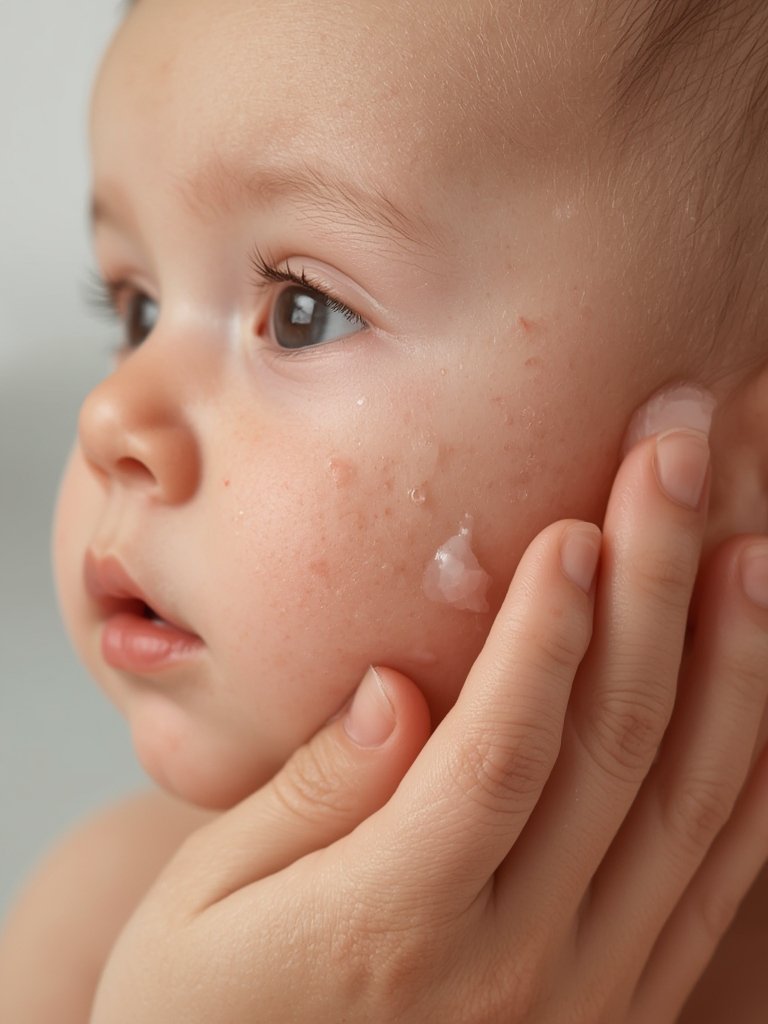
If you want to see how clean skin care should be handled for sensitive babies, our organic baby skincare guide has more dermatologist-recommended tips. Related issues like diaper rashes often benefit from similar gentle steps—read the full diaper rash treatment guide for safe options.
For newly sleeping infants, maintaining a clean, allergen-reduced crib also helps skin issues—learn more about crib safety tips for nighttime routines.
Advanced Analysis and Common Pitfalls
While baby acne is usually mild and self-limited, some families fall into avoidable pitfalls. Here’s what to watch out for:
- Over-treating or scrubbing the skin: Many parents panic and use over-the-counter acne creams, wipes, or home remedies (like breast milk or coconut oil). These can worsen irritation or even lead to infection.
- Mistaking other rashes for acne: Conditions like eczema, heat rash, or common viral rashes can resemble baby acne. If the bumps spread, appear elsewhere on the body, or have a harsh texture, get a proper diagnosis. Learn about the different types of baby face rashes to spot key differences.
- Ignoring late or persistent acne: Neonatal acne is common, but if new breakouts appear after six weeks of age or don’t fade after several months, see a board-certified dermatologist for potential underlying concerns [Source].
| Pitfall | Reality (What to Do Instead) |
|---|---|
| Using adult acne creams | Can burn baby’s skin. Stick to water and mild, fragrance-free baby soap, nothing medicated unless doctor-recommended. |
| Scrubbing with washcloths | Irritates skin further. Pat gently to dry after mild washing. |
| Believing “baby acne means poor hygiene” | Not true. Baby acne isn’t related to dirty skin or bad parenting. It’s a normal developmental phase for many infants. |
| Delaying doctor consult after 6 weeks | Persistent or new acne after 6 weeks needs medical evaluation to rule out underlying issues. |
For more advanced skin health troubleshooting, see our guide on baby eczema treatments if dry patches or redness are a concern.

Conclusion
Most cases of baby acne are mild, self-limited, and easily managed with gentle cleansing routines. The biggest risk is over-reacting with creams, scrubbing, or folk remedies that can worsen the skin’s healing process. Persistent, late-onset, or worsening skin changes increase the importance of a prompt medical evaluation. Simple, evidence-based steps ensure your child’s comfort and support healthy skin development. When in doubt, trust that the vast majority of baby acne will fade with time, patience, and proper care.
If this guide helped, bookmark it and share with other new parents—and check our full lineup of safe organic baby skincare and child development tips.
Frequently Asked Questions
Is baby acne painful or itchy for my child?
No, baby acne is usually painless and does not cause itching. If your child appears uncomfortable, develops a fever, or you notice other symptoms, consult your pediatrician.
How long does it take for baby acne to clear up?
Most cases clear within a few weeks to three months. Less common infantile acne that starts after six weeks can take six months or longer to resolve.
Can I use diaper rash cream or coconut oil on baby acne?
No, it’s best to avoid applying creams, oils, or ointments on acne-affected areas unless prescribed by a doctor. These can clog pores and worsen the skin.
When should I see a doctor about my baby’s acne?
If acne develops after six weeks of age, persists for more than three months, or your child shows additional symptoms, see a board-certified dermatologist or your pediatrician.
Is there anything I can do to prevent baby acne?
There’s no proven way to prevent baby acne, as it’s not related to hygiene or allergies. Gentle daily cleansing and avoiding greasy products may help reduce irritation.