

### Blog Post:
Baby safety gate installation is a crucial decision every caregiver faces when baby-proofing stairs or hazardous areas. A baby safety gate is meant to prevent falls, but choosing and installing the right one can be frustrating and, if done improperly, can create new dangers. Here’s what you really need to know before bringing one home.
Key Takeaways
- Proper installation and choosing the right baby safety gate design are essential to truly protect your child from stair or room-related injuries.
- Common mistakes include installing pressure-mounted gates at stairs, ignoring manufacturer instructions, and neglecting ongoing maintenance.
- Look for gates certified by ASTM and JPMA, and be wary of cost versus safety trade-offs—buying cheap can sometimes mean buying twice.
- What Is a Baby Safety Gate and Why You Need One
- Step-by-Step: Choosing and Installing the Right Baby Safety Gate
- Advanced Analysis & Common Pitfalls
- Conclusion
- FAQ
What Is a Baby Safety Gate and Why You Need One
A baby safety gate is a physical barrier installed across doorways, staircases, or room openings to prevent babies or toddlers from accessing dangerous areas or falling down stairs. The purpose is to reduce the risk of injury from slides, tumbles, or unsupervised wandering. These gates are especially critical at the top of stairs, where a single fall can have severe consequences.
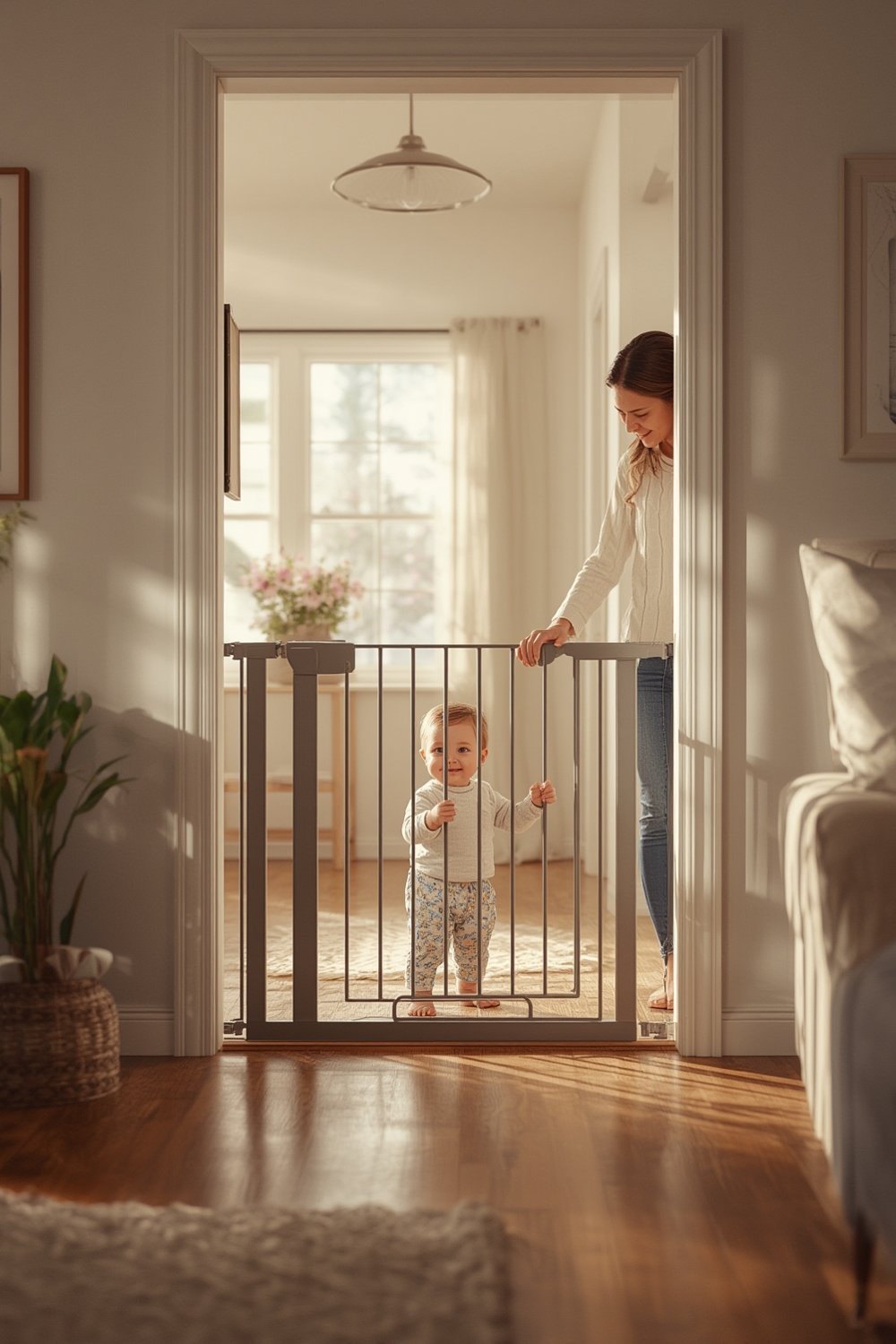
Baby safety gates come in several types, like hardware-mounted gates (screw-fixed to the wall), pressure-mounted (held in place by tension), and retractable (mesh or folding). Choosing the right design and material requires understanding your household’s unique risks—curved landings, wide openings, or pets can all dictate which gate will work best for you.
The critical factor is always installation. According to experts and safety organizations, the wrong gate or an incorrectly installed gate can sometimes be worse than no gate at all. Always verify if the product meets the ASTM and JPMA certification standards.
Gate choice also depends on budget, expected lifespan, and ongoing maintenance. Options with robust materials, reinforced locking systems, and good manufacturer support are best for long-term safety.
Step-by-Step: Choosing and Installing the Right Baby Safety Gate
To ensure true safety, here’s a clear action plan for selecting and installing a baby safety gate:
- Measure Your Space Accurately
Carefully measure the width and shape of the area where you plan to install the gate. Pay special attention to stairways with skews, curves, or extra-wide landings. Never estimate—use a tape measure and note down the exact numbers. - Determine the Best Type for Your Need
– Top of Stairs: Always choose a hardware-mounted gate (screw-fit). Pressure-mounted options can be pushed out and are not safe for stair-tops.
– Between Rooms or Bottom of Stairs: pressure-mounted gates can be considered for low-risk areas. - Check Certifications
Ensure the gate is ASTM and JPMA certified for up-to-date safety compliance. - Read All Manufacturer Instructions Carefully
Take time to review every step before starting installation. Skipping instructions is a major cause of preventable accidents. - Install Properly Using Correct Tools
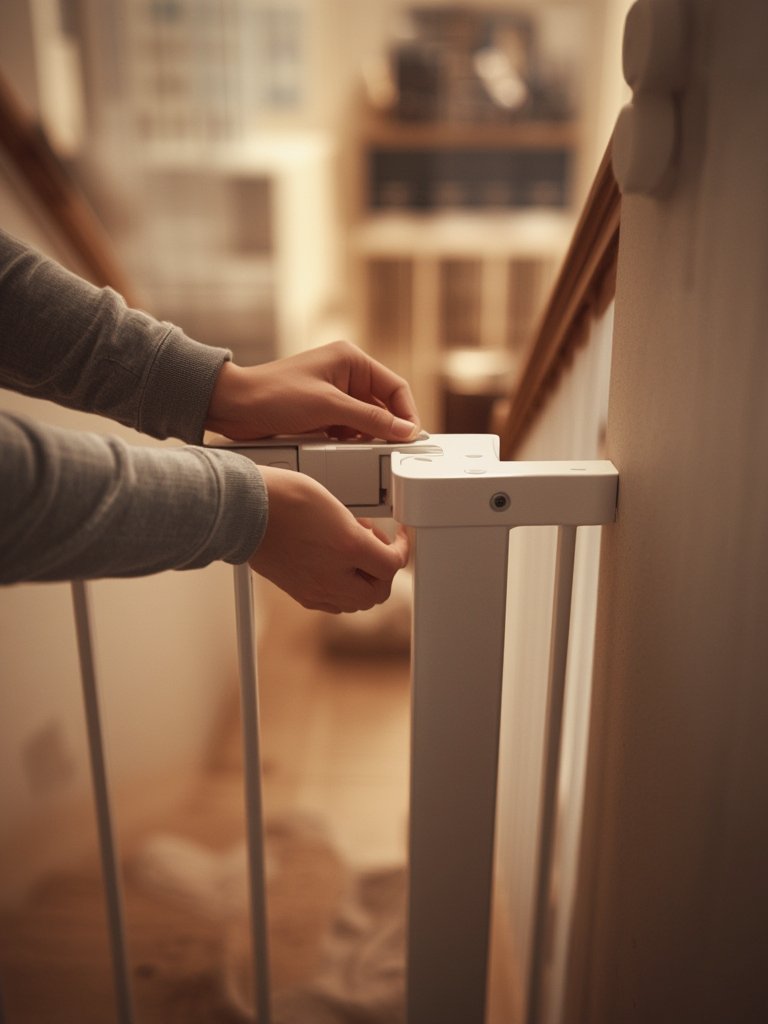
For hardware-mounted gates, use a drill and the correct fixings. For pressure-mounted, do not overtighten, and allow sealants or putty to set fully before final tensioning. - Test and Adjust
Push, pull, and rattle the gate after installation to ensure it’s solid. Check for latch strength, trip bars, or gaps. - Maintenance and Ongoing Inspections
Schedule monthly checks for loose screws, gate wobble, latch integrity, and any rust or degradation, especially for outdoor models.
Thinking about overall home safety? Check out our in-depth guide on safe sleep solutions for toddlers to cover every room in your house.
Remember, common installation problems include:
- Using pressure-mounted gates at the top of stairs
- Missing wall studs during hardware installations
- Skipping pilot holes, leading to uneven fit
- Neglecting regular maintenance, so screws and latches work loose
These mistakes can result in wobbly gates or failures that put children at risk. It’s worth reviewing official resources and parent forums for updated safety practices. For organizing your nursery after installation, view our toy storage solution guide as well.
Advanced Analysis & Common Pitfalls
Despite the best intentions, baby safety gate failures happen. The most common pitfalls are bad gate choices, misinstallation, and lacking ongoing care. Here’s a breakdown:
| Problem | What Can Go Wrong | What to Do Instead |
|---|---|---|
| Using pressure-mounted gate at top of stairs | Gate can be pushed out—child may fall down the stairs | Only use hardware-mounted gates for stair-tops |
| Not double-checking instructions | Gate is installed wrong, weak, or sits at the wrong height | Review instructions and manufacturer’s install diagrams fully |
| Failure to re-tighten screws or latches over time | Wobble, collapse, and failed latching increase as gate ages | Do monthly inspections and tighten all fittings |
| Using gate designs with horizontal bars or without filler bars | Kids climb up or get their head stuck | Select vertical slat/mesh gates with anti-climb features |
| Improper measurements for non-standard spaces | Gate will not fit snugly, leaving dangerous gaps | Measure, then buy specifically for the unique space |
Other advanced concerns:
- Trip hazards: Pressure-mounted gates leave a bar along the floor—adults can trip. Mark with bright tape or choose hardware-mounts with clear pathways.
- Non-standard installation: For curved staircases or wide gaps, use modular gates or request professional child-proofing services. Learn more about adapting your baby-proofing efforts by following this detailed external guide.
- Maintenance: Rust or loose fixings develop if outdoor gates are not made from weatherproof steel or checked frequently. Review expert tips on maintenance errors before buying for outdoor use.
- Long-term durability: There is little data comparing life expectancy of materials, but most manufacturer warranties are between 1-2 years. Ask before buying.
If your child is starting to climb or you need to adjust your gate as your toddler develops, check our parenting guide to developmental milestones. It can help predict when your gate setup might need to change. For outdoor play or shared spaces, our advice on choosing non-toxic products is also useful as your family’s needs evolve.
Conclusion
The right research and careful installation make all the difference when choosing a baby safety gate. Always prioritize ASTM and JPMA certification, choose only hardware-mounted options for stair-tops, and never skip maintenance checks or manufacturer instructions. When in doubt, invest in a higher-quality product or consult a professional—this is one case where peace of mind is worth the extra step. Protecting your child with a safe, correctly fitted baby safety gate is one of the most important—and realistic—choices you’ll make as a parent. Ready to secure your home? Safeguard your stairs, then explore our ultimate guides on safe baby carriers and safe sleep sacks for an all-around safer nursery.
FAQ
What is the safest type of baby safety gate for stairs?
Only hardware-mounted baby safety gates are considered safe for the top of stairs. Pressure-mounted gates can be dislodged by a persistent toddler or if leaned on. Always follow manufacturer installation instructions for secure fixing.
How do I know if my baby safety gate meets safety standards?
Look for certification from ASTM and JPMA on the product packaging or the manufacturer’s website. Certification ensures the gate has passed requirements for entrapment, strength, materials, and secure latching systems.
How often should I check and maintain my baby safety gate?
Inspect the gate for loose screws, wobbly frames, worn latches, and signs of damage at least once every month. Outdoor gates should be checked more often for rust or weathering. Repair or replace any faulty components immediately.
Can baby safety gates be used outdoors?
Some baby safety gates are designed for outdoor use but must be made of weatherproof and rust-resistant materials. Indoor-only gates can deteriorate quickly outdoors and become dangerous. Always verify specs before installation.
Why do pressure-mounted gates have a bar at the bottom and is it dangerous?
Pressure-mounted gates use a horizontal bar to stabilize between two surfaces. This bar can be a trip hazard for adults and older children. For high-traffic or stair-top areas, use a hardware-mounted gate instead to avoid trip risks.
[…] crawling advances, baby safety gates becomes urgent. Start by installing baby safety gates and covering […]