

### Blog Post:
Car seat safety rules can save your child’s life, but most parents are surprised to learn how easy it is to get them wrong—even when you have the best intentions. Whether you’re installing your first infant car seat or reviewing booster requirements for an older child, the rules are stricter and the consequences graver than many realize. Here’s how to get it right based on the latest data, expert tips, and what most guides miss.
Key Takeaways
- Improper car seat use is common—67% checked in 2024 were installed or used incorrectly.
- Correct car seats and proper installation reduce injury risk up to 71% for infants and 54% for toddlers in a crash.
- States with stricter booster seat laws triple proper use rates and dramatically lower childhood fatalities.
- Understanding Car Seat Safety Rules: What and Why
- Car Seat Safety Rules: Step-by-Step Guide for Every Age
- Advanced Analysis & Common Pitfalls
- Conclusion
- FAQ
Understanding Car Seat Safety Rules: What and Why
Car seat safety rules are not just legal guidelines—they are a proven way to protect children from serious injury or death in traffic crashes. In the United States alone, 555 children under 13 died in car crashes in 2023, and more than 125,000 were injured. Shockingly, 43% of those killed were unrestrained at the time of the crash. The right rear-facing car seat, installed and used correctly, dramatically reduces these risks for infants, toddlers, and older children alike.

Failure to follow car seat safety rules—such as using the wrong seat for a child’s age or size, loose harnesses, or skipping required tethers—remains the leading cause of preventable child deaths in vehicle collisions. Using a car seat correctly reduces the risk of fatal injury by 71% for infants, 54% for toddlers in cars, and nearly as much in light trucks. Booster seats lower the risk of serious injury by 45% for children aged 4–8. These rules exist because evidence proves that “just strapping in” isn’t nearly enough.
For more on child safety at home, see our guide to toddler bed safety and crib safety tips.
Car Seat Safety Rules: Step-by-Step Guide for Every Age
To maximize safety, every car seat must match your child’s age and size, be installed tightly, and used exactly as intended. Here’s what you need to do at every stage.
Birth to Age 2: Rear-Facing Only
- Use a rear-facing car seat from birth until at least age 2, or until your child surpasses the seat’s height/weight limit.
- The harness should fit snugly with the chest clip at armpit level. The belt path and seat should not move more than one inch side-to-side.
Ages 2–5: Forward-Facing Option
- Switch to a forward-facing seat only when your child has outgrown the rear-facing seat by height or weight limits.
- ALWAYS use the top tether in addition to LATCH connectors or seat belt installation; tethers reduce head movement in a crash by up to 4–6 inches.
Ages 5–12: Booster Seats Required
- Use a booster until your child is at least 4 feet 9 inches tall and can sit with their back against the seat, knees bent comfortably over the edge, and feet flat on the floor.
- Premature transitions to adult seat belts put your child at high risk for severe abdominal or neck injuries in a crash.
All Stages: Additional Rules
- Children under age 13 should always ride in the rear seat when possible—it’s significantly safer in every crash type.
- Follow your state’s laws directly, but always default to best-practice recommendations even if your state is less strict. States that extend booster laws to age 7–8 cut injuries and deaths by 17–25% for older kids (CDC data).
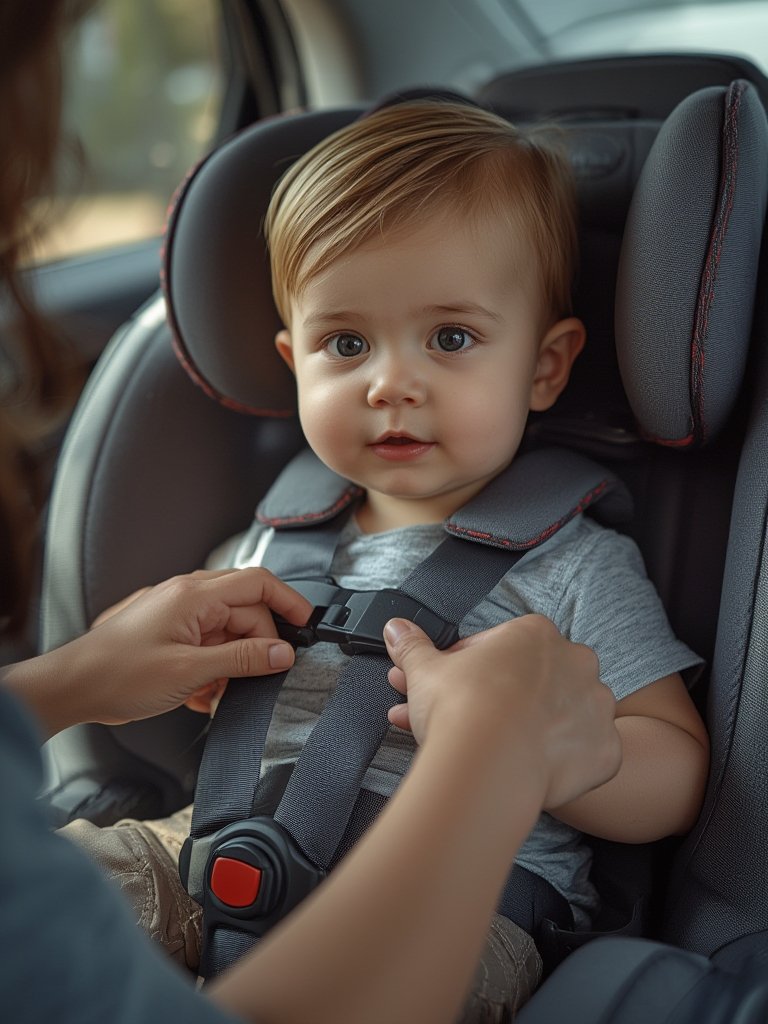
Installation and Checks
- Tighten the car seat with your knee pressing into it, applying body weight, before locking the belt or LATCH connectors.
- After tightening, the seat should not move side-to-side or front-to-back more than one inch at the belt path.
- Check the harness—no slack at the child’s shoulders. If you can pinch the strap, it’s too loose.
- Don’t place bulky coats or inserts between the child and harness—these create slack and spoil crash protection.
For more ways to keep your child’s environment safe, read our practical guide on baby proofing your home.
Curious about how safety continues outside the car? Check our essential toy storage solutions to prevent home accidents.
Advanced Analysis & Common Pitfalls
Most parents don’t realize that improper installation is more common than not—67% of checked seats in 2024 were wrong or loose. The three most common mistakes are:
- The car seat is installed too loosely (majority of checks fail here).
- Missing or unused top tether in forward-facing seats.
- Harness straps are too loose or below chest level.
There’s also a dangerous drop in proper use as children get older. Nearly 314 children ages 8–12 died in 2023 crashes—often because they were prematurely transitioned to seat belts or using the wrong booster. This highlights a critical but overlooked pain point: many parents think older kids don’t need boosters as soon as their friends stop using them, or when state laws are less strict than best practice.
Comparison: Consequences of Compliance vs. Non-Compliance
| Aspect | Compliant Car Seat Use | Non-Compliant Car Seat Use |
|---|---|---|
| Risk of Fatal Injury (Infants/Toddlers) | Reduced by 71% (infants), 54% (toddlers) | No reduction; risk as high as unrestrained |
| Injury Rate Ages 4–8 | Serious injuries lowered by 45% (with booster) | Higher risk for abdominal, neck, and head injuries |
| Compliance with State Law | Meets or exceeds; increased enforcement protection | May result in fines or prosecution |
| Likelihood of Correct Install | Improved with technician check; less than 1-inch movement | 67% error rate; most errors unnoticed by parents |
| Real-Life Example | Child survives a crash with minor injuries due to rear-facing seat | Unrestrained child ejected from the vehicle with fatal consequences |
Technical innovations like rotating car seats and top tethers mean little if not used exactly as directed. Booster seat use especially is the most neglected for older children. Check your local laws, but always follow best practices as detailed by AAA and CDC.

Looking for the latest in car seat innovations? Explore our deep dive on the best rotating car seats and which specs matter most for modern parents.
If you’re shopping for related travel safety gear, our best stroller travel system review covers complete travel solutions.
Conclusion
The latest data proves that car seat safety rules are critically important, with fatal outcomes often tied to very small mistakes. Learning and applying best practices—for every age, every trip—can truly be the difference between life and death. Always check your installation, confirm the proper use for your child’s stage, and never rush the transition out of booster seats. Remember: correct use of car seat safety rules is the best chance you have to protect your child. Don’t hesitate—review your car seat routine today, and share this information to help other families do the same.
Ready to take the next step? Review our guides on child safety gates and developmental milestones to make your entire home safer.
FAQ
How do I know if my car seat is installed correctly?
The car seat should move less than one inch at the belt path when tested firmly. Harness straps should be tight (unable to pinch extra fabric). A certified technician can double-check your work for free—visit your local fire department or find inspection events in your area.
When should my child switch from rear-facing to forward-facing?
Keep your child rear-facing until they reach the maximum height or weight listed by the car seat manufacturer—often well past age 2. This position absorbs crash forces best and is safer for young children’s head and spine.
At what age can my child graduate from a booster seat?
A child should only move to a vehicle’s seat belt when they are at least 4 feet 9 inches, can sit all the way back with knees bent over the edge, and feet flat on the floor. This usually occurs between ages 10–12, not earlier.
What are the most common mistakes made with car seat safety rules?
The top mistakes are loose installation, not using the top tether on forward-facing seats, loose harness straps, and moving children to booster or seat belts too soon. These errors significantly increase injury risk even if a child is “in a seat.”
Are car seat safety rules different in other countries?
Yes. U.S. laws and best practices may differ from Canada, Europe, or other regions. Always check local requirements if moving or traveling abroad. When in doubt, follow the strictest guidelines for your child’s size and age.