

Cradle cap removal is a key concern for parents of infants who notice thick, yellowish scales appearing on their baby’s scalp. Understanding how to address cradle cap safely can prevent complications and relieve parental worry.
Key Takeaways
- Cradle cap usually resolves on its own, but gentle removal can improve comfort and appearance.
- Avoid scratching or aggressive methods, as these can cause infection and worsen symptoms.
- Monitor for red flags like inflammation, weeping, or persistent symptoms; seek medical advice if noticed.
- What Is Cradle Cap and Why Does Removal Matter?
- Step-by-Step Guide to Safe Cradle Cap Removal
- Advanced Analysis & Common Pitfalls
- Conclusion
- Frequently Asked Questions
What Is Cradle Cap and Why Does Removal Matter?
Cradle cap is a common, non-contagious skin condition in infants, clinically known as infantile seborrheic dermatitis. It typically appears between 3 weeks and 12 months of age. These greasy, yellowish scales on the scalp are harmless and rarely cause itching or discomfort.
While cradle cap is not harmful and often resolves without treatment, removal becomes a concern for many parents due to its appearance and the desire to maintain healthy skin. Occasionally, untreated or improperly managed cradle cap can become infected—especially if scratched—making safe cradle cap removal important for infant health and comfort. According to medical literature, around 70 percent of infants develop cradle cap at its peak around 3 months of age.

Step-by-Step Guide to Safe Cradle Cap Removal
Most cases of cradle cap do not require medical treatment, but gentle removal helps the scalp appear healthier and may improve symptoms faster. Here is a structured process:
- Choose a gentle baby shampoo. Use a mild, fragrance-free shampoo designed for infants. Avoid medicated or anti-dandruff shampoos unless advised by your pediatrician.
- Soften the scales before washing. Gently massage a small amount of baby oil, mineral oil, or petroleum jelly onto the affected scalp area. Let it sit for 15-20 minutes to loosen scales. Do not leave oil on overnight, as it can worsen build-up or clog pores.
- Use a soft baby brush or washcloth. After oiling, gently brush the scalp with a soft baby brush or washcloth in tiny circles to help lift flakes. Avoid forceful scrubbing—gentleness is key.
- Shampoo and rinse thoroughly. Wash the scalp to remove oil and loosened flakes. Rinse completely to avoid leaving any residue.
- Repeat 1-2 times a week. Daily washing is not needed; over-washing may irritate the skin. Monitor for improvement, and pause if redness or irritation develops.
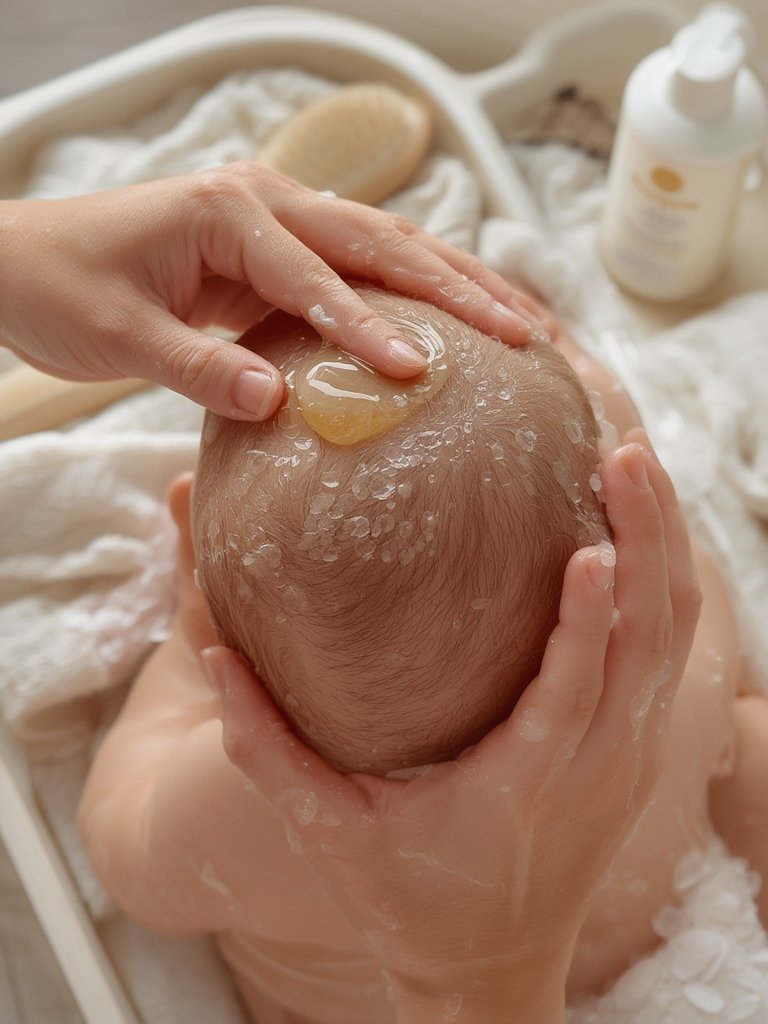
Never pick or scratch the scales, as this increases the risk of infection. If you notice redness, swelling, or oozing, contact your pediatrician immediately. For detailed guidance on safe hygiene or bath routines, see our tips on safe baby bathing practices.
For those exploring skin-friendly product options, you might find our advice on gentle and organic baby skincare useful. Worried about related conditions? Learn more about baby eczema symptoms and treatments.
Advanced Analysis & Common Pitfalls
While most cases are mild, certain mistakes in cradle cap removal are common and can prolong the condition or cause new problems:
- Too much force: Scrubbing, scratching, or picking at scales can break the skin, causing infection or bleeding.
- Overuse of oil: Leaving oil on the scalp for long periods can make the flakiness worse and contribute to bacterial growth.
- Use of harsh shampoos: Medicated or scented shampoos can dry the skin, worsening irritation.
- Neglecting warning signs: Delaying medical attention when there is redness, oozing, or spread beyond the scalp risks more serious infection.
| Removal Method | Effectiveness | Safety Considerations | Potential Pitfalls |
|---|---|---|---|
| Gentle Baby Shampoo | High | Very safe if rinsed well | Overuse can dry skin; residue if not rinsed |
| Baby Oil / Mineral Oil (short duration) | Moderate | Safe when removed promptly | Build-up if left on too long; risk of bacterial growth |
| Soft Brush or Cloth | High if used gently | Safe | Scrubbing too hard can damage skin |
| Medicated Shampoos | Reserved for persistent cases | Use only under medical supervision | May sting, irritate, or dry scalp |
Realistically, the safest approach is conservatively managing cradle cap with gentle cleansing and careful observation. Medical sources like Pampers and HealthDirect confirm this, and highlight the importance of not picking at scales to avoid infection. For more information on spotting problematic rashes, see our post on baby facial rashes.
For a broader perspective on baby hygiene and the precautions you should take, visit our guides to hypoallergenic laundry care for sensitive baby skin and managing diaper rash.

Conclusion
Safe, effective cradle cap removal relies on gentle techniques, patience, and knowing when to seek help. Avoid harsh products or rough handling—let most cases resolve on their own while managing comfort and hygiene. Notice warning signs early, and consult a healthcare provider if symptoms persist.
Want more practical, research-backed baby care tips? Explore our advice on supporting healthy baby development and related safety guides. Share your cradle cap questions or experiences in the comments below.
Frequently Asked Questions
Can I use olive oil for cradle cap removal?
While olive oil can help soften scales, some dermatologists prefer baby oil or coconut oil, as olive oil may worsen some skin conditions or contribute to yeast growth. Always rinse thoroughly and use oils sparingly.
How long does cradle cap last without removal?
Cradle cap is usually self-limiting and resolves within a few weeks to months without intervention. Some cases persist up to 6-9 months but lessen over time.
Is cradle cap contagious?
No, cradle cap is not contagious and is not related to hygiene or illness.
When should I see a pediatrician about cradle cap?
See your doctor if the cradle cap is inflamed, weeping, persists longer than 3 months, spreads, becomes itchy, or does not improve with home management.
Does cradle cap increase the risk of future dandruff?
Current research shows that cradle cap does not increase the risk of seborrheic dermatitis or dandruff later in childhood, even if it runs in the family.