

Is co-sleeping safe for your baby? Many parents wonder whether sharing a sleep space is truly a good idea. The answer is complex, and recent research reveals serious risks and tough realities every family should understand before making this decision.
Key Takeaways
- Co-sleeping increases the risk of sudden unexpected infant death (SUID), especially in adult beds and shared spaces.
- Leading medical organizations recommend infants sleep on their backs in their own crib or bassinet, free from soft bedding and loose objects.
- Comprehensive parent education and making realistic, informed choices are essential for safer infant sleep.
- What Is Co-Sleeping – And Why Does Safety Matter?
- Step-by-Step Guide: Safe Sleep for Infants
- Advanced Analysis & Common Pitfalls of Co-Sleeping
- Conclusion: What Parents Should Really Know
- FAQ
What Is Co-Sleeping – And Why Does Safety Matter?
Co-sleeping means sharing a sleeping surface with your baby—usually the same bed or a nearby space, such as a bedside sleeper. This practice is common worldwide, with nearly half of parents in the United States reporting they sometimes, often, or always co-sleep. But safety concerns are deeply rooted in decades of research:
From 2019 to 2021, unsafe sleep environments—including bed-sharing and soft bedding—contributed to an average of 42 child deaths per year in the U.S. Co-sleeping is a major factor: almost 60% of sudden unexpected infant death (SUID) cases occur in shared sleep spaces, with three-quarters of those happening in adult beds. Recent spikes in SUID rates, along with stark racial disparities, underscore the risks. These numbers have stubbornly plateaued, even after early safe sleep campaigns dramatically cut rates in the 1990s.

Understanding is co-sleeping safe starts with knowing these risks—and knowing that top experts, including the American Academy of Pediatrics, unanimously discourage bed-sharing due to the danger of suffocation, entrapment, and unexplained infant deaths. The safest sleep for babies? In their own crib, on their back, and with no extra items in the sleep area.
Step-by-Step Guide: Safe Sleep for Infants
If you want to lower sleep-related risks for your baby, follow these actionable steps—all supported by current medical guidelines and research:
- Always place your baby on their back to sleep. Side or stomach sleeping increases risk dramatically.
- Use a safety-certified crib, bassinet, or play yard in your room (not your bed). The sleep surface should be flat and firm.
- Keep the sleep area completely empty. No blankets, pillows, stuffed animals, crib bumpers, or loose bedding.
- Share a room, not a sleep surface, for the first year. Place your baby’s crib or bassinet beside your bed, making night care easier and safer (toddler bed safety and crib safety tips).
- Educate all caregivers, babysitters, and family about safe sleep rules. Consistency prevents tragic mistakes.
- Make safe sleep decisions at every transition—like travel or moving your baby to a toddler bed.
Many parents struggle with baby sleep challenges. If your baby only sleeps when held, check out our in-depth guide on how to transition a newborn to their crib for realistic solutions and gentle strategies.
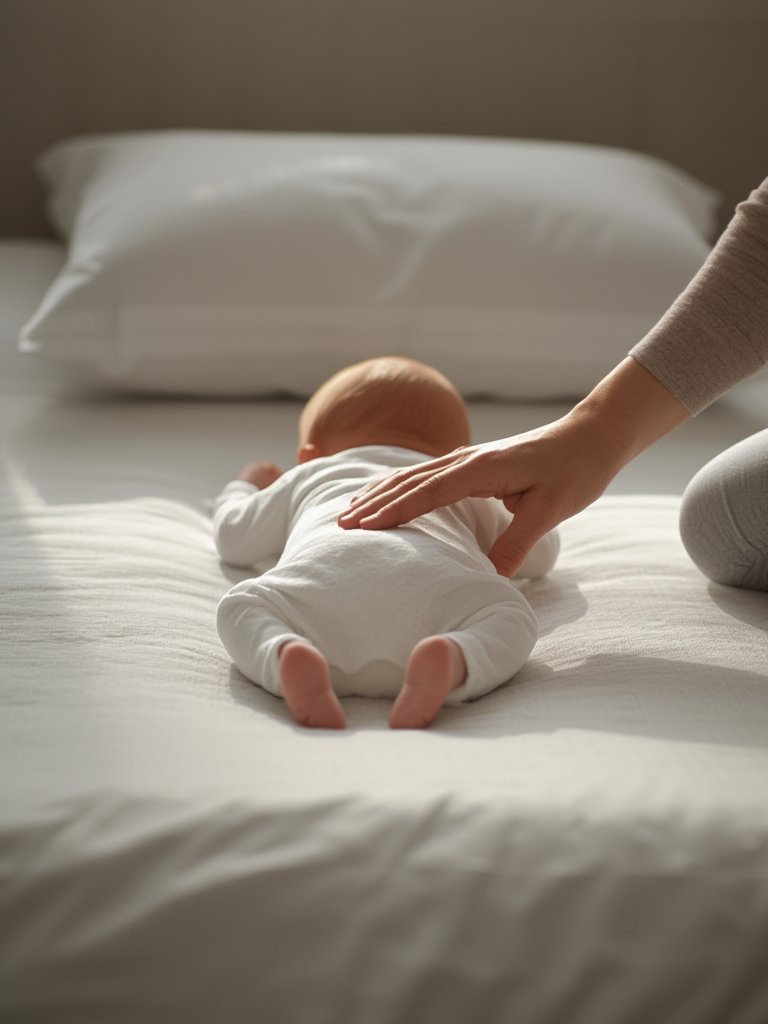
Even with safe practices in place, consider using technology wisely. A smart baby monitor can provide additional peace of mind and visibility, but remember, it’s not a substitute for following the basics of infant safe sleep.
For parents facing persistent sleep struggles or regressions, evidence shows that a structured routine helps. See our baby sleep regression guide for actionable routines, or dive into the safe sleep position for babies to reinforce expert-backed sleep habits.
Advanced Analysis & Common Pitfalls of Co-Sleeping
Despite public health campaigns, unsafe sleep remains a leading cause of death in young children—especially in families who believe “it won’t happen to me.” Here’s what the evidence tells us about the most common mistakes and risks:
| Practice | Risk Level | What Can Happen |
|---|---|---|
| Bed-sharing with an adult | Very High | Entrapment, accidental suffocation, SUID |
| Sleeping with soft objects or loose bedding | High | Suffocation, airway blockage |
| Using inclined sleepers, loungers, or positioners | High | Positional asphyxia, rolling into unsafe positions |
| Multiple unsafe sleep factors (e.g., bed-sharing and soft items) | Very High | Risk multiplies—over 80% of infants in these scenarios have >2 risk factors |
| Safe sleep in a crib with nothing else | Lowest Risk | Substantially lower rates of injury or death |
Common Pitfalls to Avoid:
- Assuming short naps or partial night bed-sharing “don’t count.” Research shows SUID risk is present even for part-time co-sleeping (source).
- Believing only “high-risk” babies need protection. SUID strikes without warning, and no infant can be reliably identified as low-risk (source).
- Using aftermarket sleep products that are not safety-certified. Many of these increase risk if used unsupervised or outside the manufacturer’s instructions.
- Ignoring racial and demographic risk factors—Black, American Indian, Alaska Native, and Pacific Islander infants face much higher SUID rates, linking to social and structural disparities (source).
When in doubt, stick to a simple, empty crib or bassinet beside your bed. For more about keeping your nursery both stylish and safe, explore nursery safety and decor ideas.

Conclusion: What Parents Should Really Know
Co-sleeping may seem natural. But the medical evidence is clear—the only safe place for your baby to sleep is alone, on their back, in a bare crib or bassinet. If you’re still wondering “is co-sleeping safe?”, remember that nearly every major health organization recommends against it. Put safety first—even when it’s inconvenient or unpopular. For more practical guidance, see our articles on baby milestones month by month and toddler bed and crib safety. Protect your baby’s sleep—protect their life.
Still have questions? Reach out to your pediatrician—or see the FAQs below for real answers on sleep safety.
FAQ
Can co-sleeping ever be made safe?
Medical experts say there is no way to make co-sleeping completely safe for infants. The only proven way to reduce the risk of SUID is a separate, empty crib, bassinet, or play yard next to your bed.
Why do many parents still co-sleep despite the risks?
Co-sleeping often starts out of convenience, to comfort a crying baby, or due to cultural beliefs. Some parents feel it’s necessary for breastfeeding or bonding. However, many underestimate the real, documented risks involved.
What if my baby refuses to sleep alone?
It’s common for newborns to resist solo sleep. A consistent routine, gradual transitions, and sleep sacks can help. For more strategies, see our guide for babies who only sleep when held.
Are bedside sleepers or co-sleeper cribs safe?
Bedside sleepers that attach securely to adult beds and meet federal safety standards are safer than bed-sharing, but medical organizations still recommend a separate crib or bassinet when possible.
Where can I find more detailed safe sleep tips and real-world solutions?
Explore our resources on baby sleep training and safe sleep positioning for actionable, expert-backed guidance.