

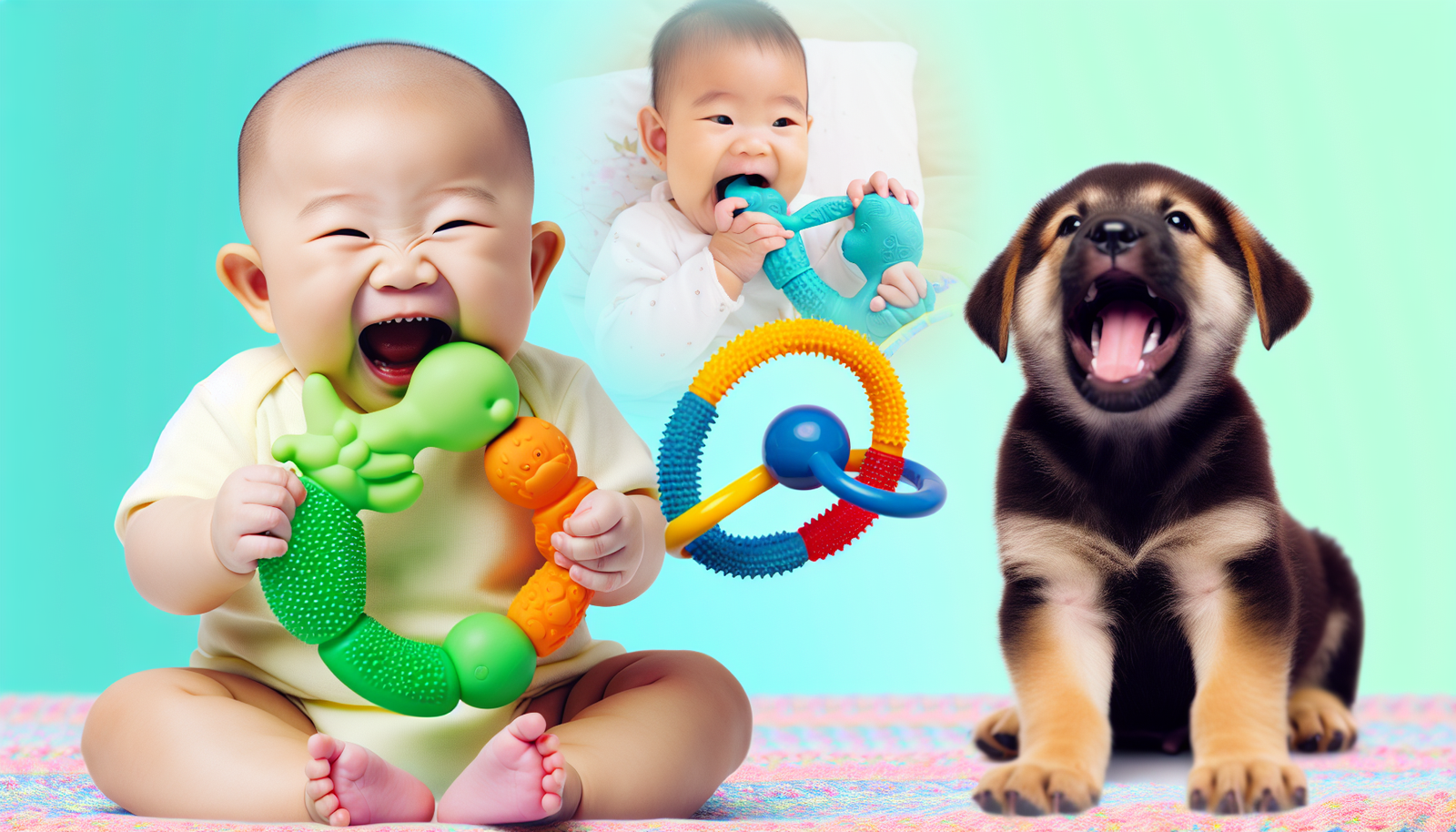
Teething is a natural but often uncomfortable stage for both human babies and puppies. The Ultimate Guide to Teething Toys for Babies and Puppies helps parents and pet owners understand the science behind teething, explore the benefits and types of teething toys, and discover expert tips for choosing safe, effective solutions that soothe pain and support healthy development.
Understanding the Teething Process in Babies and Puppies: The Ultimate Guide to Teething Toys for Babies and Puppies
The process of teething is an essential developmental milestone for both human babies and puppies, involving significant physiological changes within their mouths and impacting their overall well-being. In human infants, teething generally begins around 4 to 7 months of age, although genetics and other factors can influence this timeline. The first teeth to erupt are usually the lower central incisors, followed by the upper incisors and then the rest, with a full primary set typically present by age three. Puppies, on the other hand, start teething much earlier; their baby teeth—also known as deciduous teeth—typically begin erupting around three weeks after birth, with adult teeth replacing them by six months of age.
Both species experience a variety of symptoms during this period. Increased drooling is common in babies as the body produces more saliva to soothe irritated gums. Puppies also drool and may exhibit more chewing behaviors directed at objects within reach. Irritability, disrupted sleep, and occasional mild fever or flushed cheeks are frequently observed in teething infants. In puppies, restlessness, mild loss of appetite, and increased vocalization signal discomfort.
The biological mechanism underneath teething is similar: as new teeth move through the gum tissue, they create localized inflammation, leading to swelling, tenderness, and itching sensations in the gums. This discomfort triggers instinctual gnawing or rubbing to alleviate pressure. While both babies and puppies chew for gum relief, puppies’ strong urge to chew is compounded by their need to explore their environment and exercise jaw muscles.
Relieving this gum discomfort is vital: it aids not only in soothing pain and mood regulation but also ensures optimal oral cavity development and alignment. Prolonged gum pain can affect feeding in babies, causing them to eat less. For puppies, unmanaged chewing may lead to unwanted destruction, and poor gum health can negatively impact adult tooth alignment and overall oral hygiene—making targeted soothing strategies, like teething toys, especially important for both.
Why Teething Toys are Important for Both Babies and Puppies
Teething toys are more than just objects to chew—they serve essential physical and emotional functions during a critical development phase for both babies and puppies. As new teeth push through sensitive gum tissue, inflammation and mild pain naturally occur. By providing an appropriate surface to gnaw, teething toys act as gentle massagers for irritated gums, helping to reduce swelling, improve blood flow, and relieve discomfort. This tactile sensation soothes the urge to chew and directly addresses one of the chief complaints during teething for both species.
Chewing, in itself, offers remarkable benefits beyond pain relief. It is a self-soothing activity that can significantly decrease restlessness and fussiness in infants, and reduce anxiety and hyperactivity in puppies. As both babies and young dogs have limited ways to communicate or manage discomfort, toys provide a safe, constructive outlet for their frustrations. This distraction not only supports a better mood but also lessens the likelihood of negative behaviors, such as biting or chewing on inappropriate objects—think of a baby gnawing on furniture edges, or a puppy destroying shoes.
Teething toys can also play a role in proper oral development. As babies or puppies chew and explore differently textured toys, this process helps stimulate the eruption of healthy teeth and promotes strong jaw muscles. Additionally, the variety and design of modern teething toys—some with ridges, bumps, or different resistance levels—encourage sensory exploration and fine motor skill practice.
While teething toys for babies and puppies share many benefits, key differences exist in their construction. Baby toys are designed for delicate mouths and hands, emphasizing non-toxic materials and easy grip. Puppy toys, by contrast, must endure sharper teeth and stronger jaws, often requiring tougher, more durable materials. Recognizing these distinctions is important as you select teething aids suited to the developmental needs and safety standards for your little one or furry friend.
Materials and Safety Considerations for Teething Toys
When choosing teething toys for babies or puppies, the material and safety aspects deserve careful consideration to minimize risks and maximize benefits. The most common materials include food-grade silicone, natural or synthetic rubber, untreated wood, and for babies, gel-filled options. Each material presents unique advantages and some potential hazards.
Silicone is increasingly favored due to its non-porous surface, flexibility, and resistance to heat and bacteria, making it ideal for both babies and puppies. However, only medical- or food-grade silicone should be chosen; inferior silicons may contain fillers or dyes with toxic properties. Likewise, rubber toys (like natural latex or synthetic alternatives) are gentle on gums, but natural latex may trigger allergies in some infants or pets. Always verify that rubber toys are free from BPA, phthalates, lead, and other chemicals highlighted in recent product recalls.
Wooden teething toys, often made from sustainably sourced hardwoods, are naturally antibacterial and durable, but ensure they are free from splinters and finished only with safe, non-toxic oils or beeswax. Avoid painted woods unless certified lead- and toxin-free. Gel-filled teethers may provide cooling relief, but be cautious—punctures can release harmful substances, and several recalls underscore the importance of only choosing trusted brands with robust quality controls.
To avoid choking hazards, select toys that cannot fit entirely into a child’s or puppy’s mouth and that have no detachable small parts. Inspect for cracks, tears, or weak seams, as wear and tear may create unsafe edges or loose pieces. Wash teething toys regularly—silicone and rubber are often dishwasher safe, while wood should be wiped clean and air dried. Always consult updates from regulatory agencies about recalls, and heed pediatrician or veterinarian guidelines to ensure ongoing safety and hygiene as your little one or furry friend grows.
Choosing the Best Teething Toys: Features and Recommendations
Selecting the best teething toys for babies and puppies takes careful consideration of features that maximize relief, safety, and promote healthy habits as little ones and furry friends grow. Prioritizing durability is key; babies and especially puppies can deliver remarkable chewing power, so a robust toy that resists breaking or splintering lasts longer and prevents accidental ingestion. Texture is equally important—look for toys with nubs, ridges, or grooves that massage gums and offer varied sensory stimulation. Toys like teething rings for babies or knotted rope toys for puppies are praised for their gum-soothing textures and engaging shapes.
Size matters: for infants, teething toys should be large enough to prevent choking yet small enough to grasp and maneuver easily. For puppies, sturdy toys should accommodate their unique jaw shape and breed size, and should not be small enough to be swallowed. Ease of cleaning helps maintain hygiene between uses; silicone and hard rubber toys for both groups can often be boiled or placed in the dishwasher for sanitization.
Comparing popular types, pediatricians often recommend one-piece silicone teething rings and food-grade wooden teethers free of paints or varnishes. Infant teething biscuits are generally safe under supervision but should be made from simple ingredients and only given when babies are developmentally ready for solids. Leading baby brands like NUK, Sophie la Girafe, and Comotomo offer varied sensory benefits and practical features.
For puppies, veterinarians advise avoiding toys that splinter, such as cooked bones and brittle chews. Instead, look for robust rubber toys (like Kong or Nylabone), freezable teething rings, or chilled carrots for natural relief. Soft plush toys can comfort, but monitor for ripped seams or loose stuffing. Chew toys that combine durability, enticing textures, and dental benefits are widely recommended by veterinary professionals for promoting safe, healthy teething.
Maintaining Oral Health Beyond Teething
As babies and puppies move past the teething stage, maintaining their oral health becomes an essential, lifelong priority. Transitioning from teething toys to a broader dental care routine should start early, leveraging the habits already familiar to your little one or furry friend. For babies, begin by gently cleaning their gums and, when teeth emerge, using a soft-bristled toothbrush and water. As they grow, introduce fluoride toothpaste in a rice-sized amount, teaching them the importance of brushing twice daily. Establishing a consistent oral hygiene routine should include regular dental checkups with a pediatric dentist, typically starting by their first birthday.
With puppies, early exposure to gentle mouth handling and tooth brushing sets the stage for cooperative, stress-free dental care as adults. Use a dog-specific toothbrush and toothpaste, focusing on daily brushing. Starting as early as possible helps puppies accept this as a positive, normal part of their care routine. Regular veterinary dental checkups are crucial, as professional cleaning may be needed to prevent tartar buildup and identify problems before they advance.
Both babies and puppies benefit from the continued use of safe, age-appropriate toys designed to clean teeth and massage gums. For babies, choose toys that remain stimulating as they reach toddlerhood—for example, textured silicone brushes or chewable toothbrushes. For dogs, provide durable dental chews or textured rubber toys that help control plaque and tartar while satisfying natural chewing instincts.
With intentional, age-appropriate habits and consistent professional oversight, proper teething management lays the groundwork for a lifetime of oral health. Consistently practicing good routines and using the right toys for dental hygiene ensures not only healthy gums and teeth but also reduces the risk of dental disease, promoting well-being from the earliest days onward.
Conclusions
Understanding teething and selecting the right toys can ease discomfort, bring happiness, and lay the groundwork for lifelong health in babies and puppies. By focusing on safety, material quality, and developmental needs, you ensure your little one or furry friend navigates teething happily and safely. Prioritize informed choices and regular care for healthy smiles and wagging tails.
Learn more about Everything related to a baby in our 🍼 Baby Products
For simple ideas to make your home comfortable for you and your child: [roomluminate].